
The Mechanics' Institutes of Victoria (MIV) was formed in 1998 following a State Conference of Mechanics' Institutes (MIs) held in Kilmore in April of that year. It aims to foster the preservation and restoration of the social, cultural and physical heritage of active MIs throughout the state as well as to encourage and facilitate recognition and preservation of MI buildings and the revival of inactive MIs.The purpose of the MIV Historical Plaques Program is to inform the public of the history of Mechanics' Institutes in Victoria and also give a snippet of history about the individual Institute.
59 out of 68 (86%) plaques have been curated
62 subjects all or unphotographedGender Diversity
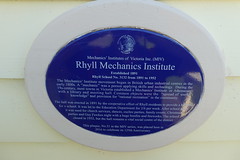
MIV Historical Plaques Program #0051
Rhyll Mechanics' Institute. Established 1891. Rhyll School No. 3132 from 1891 to 1952. The Mechanics' Institute movement began in British urban industrial centres in the early 1800s. A "mechanic" was a person applying skills and technology. During the 19th century, most towns in Victoria established a Mechanics' Institute or Athenaeum with a library and meeting hall. Common objects were the "spread of useful knowledge" and provision for "rational recreation" in the community. The hall was erected in 1891 by the cooperative effort of Rhyll residents to provide a building for a school. It was let to the Education department for 2/6 per week. After school hours it was used for church services, dances, euchre parties, family events, Christmas parties and Guy Fawkes night with a huge bonfire and fireworks. The school closed in 1952, but the hall remains a vital social centre of the district. This plaque, No. 51 in the MIV series, was placed here in 2016 to celebrate its 125th Anniversary.
Lock Road, Rhyll, Victoria, Australia
Subjects
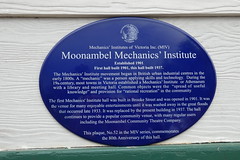
MIV Historical Plaques Program #0052
Moonambel Mechanics' Institute. Established 1901. First hall built 1901, this hall built 1937. The Mechanics' Institute movement began in British urban industrial centres in the early 1800s. A "mechanic" was a person applying skills and technology. During the 19th century, most towns in Victoria established a Mechanics' Institute or Athenaeum with a library and meeting hall. Common objects were the "spread of useful knowledge" and provision for "rational recreation" in the community. The first Mechanics' Institute hall was built in Brooke Street and was opened in 1901. It was the venue for many enjoyable entertainments until it was washed away in the great floods that occurred late 1933. It was replaced by the present building in 1937. The hall continues to provide a popular community venue, with many regular users including the Moonambel Community Theatre Company. This plaque, No. 52 in the MIV series, commemorates the 80th Anniversary of this hall.
14 Woods Street, Moonambel, Victoria, Australia
Subjects


MIV Historical Plaques Program #0053
Merton Mechanics' Institute (later Merton Memorial Hall). Established 1910. Building opened 1923. The Mechanics' Institute movement began in British urban industrial centres in the early 1800s. A "mechanic" was a person applying skills and technology. During the 19th century, most towns in Victoria established a Mechanics' Institute or Athenaeum with a library and meeting hall. Common objects were the "spread of useful knowledge" and provision for "rational recreation" in the community. In 1910, the Merton community met to discuss building a public hall and Mechanics' Institute. The Mechanics' Institute hall finally opened on 20th June 1923 at a cost of 550 pounds. It had a main hall for social events, and a smaller room for a library. In 1944 the Merton community supported changing the hall's official name to Merton Memorial Hall to honour residents who served in both wars. In 1952 the hall was upgraded with a kitchen and toilets, and major renovations have taken place over recent years. This plaque, No. 53 in the MIV series, was placed here in 2016 to celebrate this historic hall's restoration and its continuing role in the community.
17 Shaws Road, Merton, Victoria, Australia
Subjects


MIV Historical Plaques Program #0054
Amphitheatre Mechanics' Institute. Established here in 1901. The Mechanics' Institute movement began in British urban industrial centres in the early 1800s. A "mechanic" was a person applying skills and technology. During the 19th century, most towns in Victoria established a Mechanics' Institute or Athenaeum with a library and meeting hall. Common objects were the "spread of useful knowledge" and provision for "rational recreation" in the community. The Amphitheatre Mechanics' Institute was first instigated by Headmaster, Albert M. Barry. It was constructed by a local builder, Mr. William Whitley, at a cost of 179 pounds. The official opening was on 19th November 1901. The Free Library was established soon after. Many original books remain, including the 1900 edition of the Encyclopaedia Brittanica. In 2011 the library was renamed the 'Glenlogie Room' and is used for meetings and displays of historic memorabilia. The Mechanics' Institute continues to be well utilised by many groups and prides itself on its community support and spirit. This plaque, No.54 in the MIV series, was placed here in 2016.
, Amphitheatre, VI, Australia
Subjects

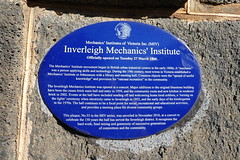
MIV Historical Plaques Program #0055
Inverleigh Mechanics' Institute. Officially opened on Tuesday 27 March 1866. The Mechanics' Institute movement began in British urban industrial centres in the early 1800s. A "mechanic" was a person applying skills and technology. During the 19th century, most towns in Victoria established a Mechanics' Institute or Athenaeum with a library and meeting hall. Common objects were the "spread of useful knowledge" and provision for "rational recreation" in the community. The Inverleigh Mechanics' Institute was opened at a concert. Major additions to the original bluestone building have been the cream brick main hall and entry in 1959, the community room and new kitchen in rendered brick in 2002. Events at the hall have included sending off and welcoming home local soldiers, a 'turning on the lights' ceremony when electricity came to Inverleigh in 1952, and the early days of the kindergarten in the 1970s. The hall continues to be a focal point for social, recreational and educational activities, and provides a meeting place for diverse community groups. This plaque, No. 55 in the MIV series, was unveiled in November 2016, at a concert to celebrate the 150 years the hall has served the Inverleigh district. It recognises the hard work, fund raising and generosity of successive generations of committees and the community.
, Inverleigh, VI, Australia
Subjects

MIV Historical Plaques Program #0056
Ararat Mechanics' Institute. Established in 1859, first built on the Barkly Street site in 1869. The Mechanics’ Institute movement began in British urban industrial centres in the early 1800s. A “mechanic” was a person applying skills and technology. During the 19th century, most towns in Victoria established a Mechanics’ Institute or Athenaeum with a library and meeting hall. Common objects were the “spread of useful knowledge” and provision for “rational recreation” in the community. The 1869 building was rebuilt in 1889, and again in 1908. The Federation style building with its corrugated iron roof, red brick walls, timber windows and doors, and finely decorated parapet, is a feature of the streetscape. In its early years it had an extensive library, and held music classes, lectures and penny readings. In the 1980s the top floor became the venue for the Rosengreen School of Dance with dance teacher Stella Rosengreen. Stella died in 1997, but a Dancing School continues with about 200 students, and a Hairdressing Salon operates downstairs. David Rosengreen joined the Committee in the 1980s. Now Secretary/Treasurer, and with Alan Wetton, President, he has continued to work tirelessly to keep the Institute functioning. This plaque, No.56 in the MIV series, is dedicated to David Rosengreen in recognition of his lifetime of service to the local community. December 2016.
Barkly Street, Ararat, VI, Australia
Subjects
MIV Historical Plaques Program #0057
Sea View Mechanics' Institute. (now Seaview Mechanics’ Institute Inc.) Built on this site in 1905. The Mechanics’ Institute movement began in British urban industrial centres in the early 1800s. A “mechanic” was a person applying skills and technology. During the 19th century, most towns in Victoria established a Mechanics’ Institute or Athenaeum with a library and meeting hall. Common objects were the “spread of useful knowledge” and provision for “rational recreation” in the community. The early pioneers held meetings, concerts, church services, balls and euchre parties in the Sea View School. As the number of settlers grew they agitated for a hall. Money was raised by local subscription and the Sea View Mechanics Institute and Library was built on land donated by Mr Bernard Kennedy, with plans provided gratis by architect Mr Lacey of Sale. The building was completed by Mr R. Games of Yannathan at a cost of £300. The grand opening by the Hon. J.E.Mackey,M.L.A. on Wednesday 14th June 1905 was attended by more than 200 people. This plaque, No.57 in the MIV series, was placed here in February 2017 in recognition of the building's significance in the history of the district.
, Seaview, Victoria, Australia
Subjects
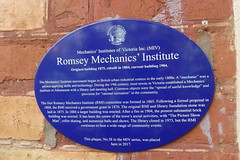
MIV Historical Plaques Program #0058
Romsey Mechanics' Institute. Original building 1875, rebuilt in 1884, current building 1904. The Mechanics’ Institute movement began in British urban industrial centres in the early 1800s. A “mechanic” was a person applying skills and technology. During the 19th century, most towns in Victoria established a Mechanics’ Institute or Athenaeum with a library and meeting hall. Common objects were the “spread of useful knowledge” and provision for “rational recreation” in the community. The first Romsey Mechanics Institute (RMI) committee was formed in 1865. Following a formal proposal in 1868, the RMI received a government grant in 1870. The original RMI and library foundation stone was laid in 1875. In 1884 a larger building was erected. After a fire in 1904, the present substantial brick building was erected. It has been the centre of the town’s social activities, with “The Picture Show Man”, roller skating, and numerous balls and shows. The library closed in 1975, but the RMI continues to host a wide range of community events. This plaque, No.58 in the MIV series, was placed here in 2017.
122 Main St, Romsey, VI, Australia
Subjects

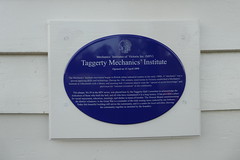
MIV Historical Plaques Program #0059
Taggerty Mechanics' Institute. Opened on 15 April 1898. The Mechanics' Institute movement began in British urban industrial centres in the early 1800s. A "mechanic" was a person applying skills and technology. During the 19th century, most towns in Victoria established a Mechanics' Institute or Athenaeum with a library and meeting hall. Common objects were the "spread of useful knowledge" and provision for "rational recreation" in the community. This plaque, No. 59 in the MIV series, was placed here by the Taggerty Hall Committee to acknowledge the dedication of those who built the hall, and all who have maintained it in a long history. It has provided a place for social enjoyment, education, meetings, and shelter in times of trouble. The Honour Board commemorating the district volunteers in the Great War is a reminder of the truly testing times endured by our forbears. Today this beautiful building still serves the community, and is a centre for local activities, drawing the community together as intended by the founders.
5 Taggerty-Thornton Rd, Taggerty, Australia
Subjects

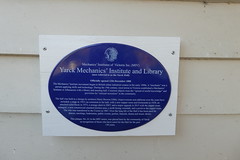
MIV Historical Plaques Program #0061
Yarck Mechanics' Institute and Library (now referred to as the Yarck Hall). Officially opened 12th December 1888. The Mechanics' Institute movement began in British urban industrial centres in the early 1800s. A "mechanic" was a person applying skills and technology. During the 19th century, most towns in Victoria established a Mechanics' Institute or Athenaeum with a library and meeting hall. Common objects were the "spread of useful knowledge" and provision for "rational recreation" in the community. The hall was built to a design by architect Harry Browse Gibbs. Improvements and additions over the years have included: a stage in 1923; an extension to the hall, with a new supper room and kitchenette in 1938; an attached toilet block in 1973; a storage shed in 2007; and a major upgrade in 2015 with the supper room enlarged, a new commercial standard kitchen area, a north facing verandah, and a porch to the supper room. The title was transferred to the Crown in 1967. Over the long life of the Hall it has been used for dances, meetings, badminton, public events, parties, funerals, drama and music shows. This plaque, No. 61 in the MIV series, was placed here by the community of Yarck in recognition of those who have cared for the Hall for the past 130 years.
Maroondah Highway, Yarck, VI, Australia
Subjects

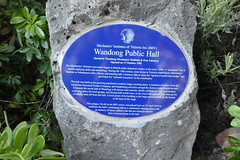
MIV Historical Plaques Program #0060
Wandong Public Hall (formerly Wandong Mechanics' Institute & Free Library) Opened on 17 October 1902. The Mechanics' Institute movement began in British urban industrial centres in the early 1800s. A "mechanic" was a person applying skills and technology. During the 19th century, most towns in Victoria established a Mechanics' Institute or Athenaeum with a library and meeting hall. Common objects were the "spread of useful knowledge" and provision for "rational recreation" in the community. The hall was built as the growing population needed a larger meeting place. A donation of timber from the Australian Seasoned Timber Company, and fundraising activities around the district, helped build the hall. It became the social hub of Wandong with dances and concerts, family celebration, fairs, and bazaars, a meeting place for the local groups, and during both world wars, as the local men enlisted, they were given rousing send-off from the hall. A focal point of the building is the large mural painted on the boards at the back of the stage. This plaque, No. 60 in the MIV series, was placed here on 25th April 2018 to celebrate the hall's continuing role as a community meeting place, and in memory of those soldiers who did not return to receive their welcome home at the hall.
19 Rail Street, Wandong, Victoria, Australia
Subjects

MIV Historical Plaques Program #0064
Ballaarat Mechanics' Institute. Established on this site in 1860. The Mechanics' Institute movement began in British urban industrial centres in the early 1800s. A "mechanic" was a person applying skills and technology. During the 19th century, most towns in Victoria established a Mechanics' Institute or Athenaeum with a library and meeting hall. Common objects were the "spread of useful knowledge" and provision for "rational recreation" in the community. Ballaarat Mechanics' Institute was founded in 1859. The main building was constructed in 1860 and the front four-story section added in 1869. Since its inception, the Institute has been a significant centre of cultural activity and social life in Ballarat. During 2004-2013 the building was fully refurbished to return to its 19th century glory. This plaque, No. 64 in the MIV series, was unveiled on 17 November 2018 by Dr Frank Hurley OAM, MIV founding President, on the occasion of the 20th anniversary of the formation of the Mechanics' Institutes of Victoria.
Sturt Street, Ballarat, VI, Australia
MIV Historical Plaques Program #0063
Neerim Junction Hall (originally the Neerim Mechanics' Institute and Free Library. Built on this site in 1873. The Mechanics' Institute movement began in British urban industrial centres in the early 1800s. A "mechanic" was a person applying skills and technology. During the 19th century, most towns in Victoria established a Mechanics' Institute or Athenaeum with a library and meeting hall. Common objects were the "spread of useful knowledge" and provision for "rational recreation" in the community. In 1873 the original building was built for the Neerim Mechanics' Institute and Free Library. It was burned down in the fires of Black Friday in 1898, but built again in the same year. The name Neerim Junction began to be used about 1911. In December 1972 the hall burned down again. It was rebuilt, with community support, and officially opened in November 1978 as the Neerim Junction Hall. This plaque, No.63 in the MIV series, was placed here on 11 November 2018 to celebrate the 40 Year Anniversary. "By the Community for the Community"
2957 Main Neerim Rd, Neerim Junction, VI, Australia
MIV Historical Plaques Program #0062
Tatura Mechanics' Institute [full inscription unknown]
, Tatura, Victoria, Australia
MIV Historical Plaques Program #0065
Mt Egerton Mechanics' Hall [full inscription unknown]
, Mount Egerton, Australia
MIV Historical Plaques Program #0066
Pyramid Hill Mechanics' Institute and Free Library [full inscription unknown]
, Pyramid Hill, VI, Australia
MIV Historical Plaques Program #0067
Horsham Mechanics' Institute [full inscription unknown]
, Horsham, VI, Australia
MIV Historical Plaques Program #0068
Lancefield Mechanics' Institute [full inscription unknown]
, Lancefield, Victoria, Australia