

Texas Historical Marker #14885
Rock Hill Cemetery. Rock Hill Cemetery has served this area since the late 1800s. It is located on land granted to pioneer Alexander J. Clayton, who migrated here from Alabama with his wife, Martha (Carver), and his children in 1854. Clayton, who was born in North Carolina, was a farmer and leader in the Rock Hill community, which developed around the Rock Hill Baptist Church. Residents of Rock Hill, and the nearby settlements of Martin Springs and Pine Hill, were the first to use this cemetery The earliest recorded interment here, of Juno Martin, a young daughter of settlers Robert James and Lenora (Taylor) Martin, dates to 1885. In 1900, one of Alexander Clayton's sons, Rufus, sold property he inherited, including two acres set aside for burials, to his brother Columbus, formally establishing the cemetery. Rufus and Columbus were farmers and school district trustees. Others buried here include farmers, early area settlers, community leaders and veterans of military conflicts. Features in the cemetery include curbing, an enclosed wall of sandstone surrounding a grave, vertical stones and Woodmen of the World markers. Through the years, need for additional land arose; various individuals graciously contributed property to the cemetery in 1979 and 1984. In 1982, relatives of those interred here established the Rock Hill Cemetery Association to maintain the burial ground. Today, Rock Hill Cemetery continues to serve the area and remains as a testament to the early Henderson County pioneers and residents of the Rock Hill, Martin Springs and Pine Hill communities. Historic Texas Cemetery-2006 #14885
?, Brownsboro, TX, United States
Texas Historical Marker #10364
Arthur C. Horton, M.D.. (August 27, 1873 - June 6, 1946) A native of Mississippi, Arthur Columbus Horton came to Texas with his family in 1876. He studied medicine at Barnes Medical College in St. Louis, Missouri and the University of Dallas Medical College (later Baylor University College of Medicine). Dr. Horton married Sallie Belle Worsham in 1899, and opened a medical practice in Henderson County, where he served the public for four decades. After the death of his first wife in 1905, Horton married Vinnie Lee Scott in 1906, and they moved from Leagueville to Murchison where he practiced medicine, served as county health officer and, as a member of the school board, was instrumental in the consolidation of local rural schools. He also was active in the local Masonic Lodge, Methodist church, and Red Cross. He later moved his family and practice to Brownsboro, where he remained until his death. Among Dr. Horton's professional accomplishments was his instrumental role in the eradication of malaria from East Texas. He volunteered for medical service during two of Texas' most devastating disasters, the 1900 Galveston storm and the 1937 New London School explosion. #10364
?, Brownsboro, TX, United States
Texas Historical Marker #10374
Red Hill Cemetery. Settlement in this area began in the 1840s. By 1849 the Red Hill Methodist Church had been established about three miles northwest of here. Sometime prior to 1877 the Red Hill Methodist congregation began to hold camp meetings at this site. In 1877 Smith County resident H. E. Calehan donated more than seven acres here to the Red Hill Methodist Episcopal Church, South. Though a church building was never built at the site, Methodist congregations from the Red Hill and Blackjack communities attended summer revivals here. The religious gatherings, which included brush arbor meetings, became traditional annual events. According to local tradition burials took place here prior to the first recorded interment, that of Joel and Mary Morton's daughter Lucinda in 1877. The site became a community graveyard serving the area's rural community and the towns of Brownsboro, Blackjack, and Murchison. Red Hill Cemetery contains more than 450 marked grave sites. Among the people buried here are many of the pioneer settlers of the area and their descendants and veterans of wars ranging from the Civil War to the Vietnam conflict. The cemetery is maintained by the Red Hill Cemetery Association. Sesquicentennial of Texas Statehood 1845 - 1995 #10374
?, Brownsboro, TX, United States
Texas Historical Marker #10377
Old Rock Hill Cemetery. The first known burial in this cemetery, that of Thomas Clark, dates to 1851. He was buried on land that was public domain until 1857 when A. J. Laymance was awarded title to a tract of land of more than 292 acres. The Old Rock Hill Cemetery consists of nearly an acre of land and lies in the southeast corner of the Laymance survey. Many of the early settlers along the Horn Branch and the Kickapoo Creek watersheds are buried here. Martin Horn, for whom Horn Branch is named, and his wife Minda are buried here. Although there are 80 documented burials, several grave markers have become illegible. Among those buried here are John Lindsey, veteran of the War of 1812 and a Cherokee County commissioner, and Civil War veterans Hassell Chandler, John Boatman, and Jacob R. Laymance. The last burial to occur here was in 1913 upon the death of Era Tindel. When roads to this site became impassable during bad weather, a new cemetery was established nearby and named the New Rock Hill Cemetery. In 1983 the Old Rock Hill Cemetery was deeded to the Rock Hill Cemetery Association, which owns and maintains both sites. #10377
?, Brownsboro, TX, United States

Texas Historical Marker #10368
Site of Old Normandy. First Norwegian colony in Texas. Founded in 1845 by Johan Reinert Reierson (1810-1864) and Ole Reierson, of Holt, Norway. In "Christianssandsposten," J.R. Reierson urged Norwegians to find "a rich life" by migrating to Texas. His associate editor, Elise Tvede (1815-1895), also came to Texas and continued writing for publications in Norway. She married Wilhelm Warenskjold, lived in this area, and opened home to Norwegian newcomers. #10368
SH 31 at FM 314, Brownsboro, TX, United States
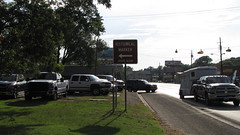
Texas Historical Marker #10345
Brownsboro Norwegian Lutheran Cemetery. After migrating from Norway in 1845, Ole Reierson bought the land that included this cemetery site (1.1 mi. ESE). He chose the spot for his burial and carved several of the plain brown gravestones before he died in 1852. The cemetery's 24 marked and 81 unmarked graves are mostly those of Norwegian immigrants. A Lutheran church built nearby in 1889, served as a cemetery chapel until the 1920s. Will Tergerson tended the site for many years. An association formed in 1974 by descendants of early settlers now maintains it. #10345
SH 31 at FM 314, Brownsboro, TX, United States