

10 & 11 Church Street Built in 1711 as part of a street of merchants' houses that linked the Parish Church with the commercial High Street and Riverside.
10 & 11 Church Street, Sunderland, United Kingdom

Customs House Near this plaque stood the Elizabethan Customs House. It was demolished in 1935 when the Corporation Quay was built.
Spring Garden Close, Sunderland, United Kingdom
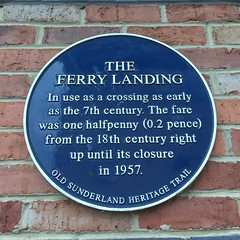
The Ferry Landing. In use as a crossing as early as the 7th century. The fare was one halfpenny (0.2 pence) from the 18th century right up until its closure in 1957.
, Sunderland, United Kingdom
Subjects

The Town Moor Originally 80 acres was given to the Freemen of Weremouth by Hugh de Puisit, Bishop of Durham, in his charter of 1154. It was used for bull-baiting, horseracing, fairs and public meetings.
, Sunderland, United Kingdom
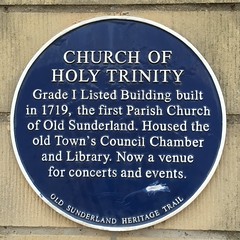
Church of Holy Trinity Grade 1 Listed Building built in 1719, the first Parish Church of Old Sunderland. Housed the old Town's Council Chamber and Library. Now a venue for concerts and events.
, Sunderland, United Kingdom
Subjects

Bull Lane. A typical 18th century alleyway leading to Low Street and the Quayside. Whilst many alterations have since taken place, the houses on either side date back to 1690.
Bull Lane, Sunderland, United Kingdom
St. John's Chapel/Church. Built 1769 by local coal fitter John Thornhill to ease overcrowding at the Parish Church. It became a separate parish church in 1876 and a garrison church 1823-1919. Demolished 1972.
Propect Row, Sunderland, United Kingdom
Subjects

Trafalgar Square. Built 1840. Early Victorian seamen's almshouses funded by the muster rolls. Honours 76 sailors from Old Sunderland that were present at the Battle of Trafalgar on 21st October 1805.
, Sunderland, United Kingdom
Subjects
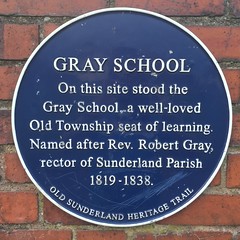
Gray School. On this site stood the Gray School, a well-loved Old Township seat of learning. Names after Rev. Robert Gray, rector of Sunderland Parish 1819-1838.
, Sunderland, United Kingdom
Subjects
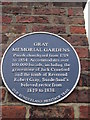
Gray Memorial Gardens. Parish churchyard from 1719 to 1854. Accommodates over 100,000 burials, including the gravestone of Jack Crawford and the tomb of Reverend Robert Gray, Sunderland's beloved rector from 1819 to 1838.
, Sunderland, United Kingdom
Subjects

The Workhouse. Site of the Sunderland Parish Workhouse, built 1740 and housing 600 people. Attached to it was a pin factory, a sailmaker's loft and the Township's second hospital.
, Sunderland, United Kingdom
Subjects
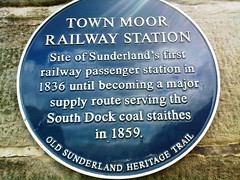
Town Moor Railway Station. Site of Sunderland's first railway passenger station in 1836 until becoming a major supply route serving the South Dock coal staithes in 1859
Prospect Row, Sunderland, United Kingdom
Subjects

Prospect Row Mission. A children's mission since 1885, work continues today as a youth project. First public building to have outward opening doors in response to the Victoria Hall disaster
Y Zone Community Centre, The Quadrant, Sunderland, United Kingdom