
Places, subjects, or plaques matching "about"
40 plaque matching "about"

Four feet below this spot is the stone step, formerly the entrance to the cottage in which lived Andrew Marvell, poet, wit and satirist. Colleague with John Milton in the foreign or Latin secretaryship during the Commonwealth; and for about twenty years MP for Hull. Born at Winstead Yorkshire, 31st March 1621. Died in London, 18th August 1678 and buried in the Church of St Giles-In-The-Fields.
Outside wall of Waterlow Park, High Street, Highgate, N6, London, United Kingdom
Subjects


Battle of Honey Hill During this battle of Nov. 30, 1864, Confederate commander Charles J. Colock, by ordering that a nearby field of grass be set ablaze, delayed approaching Federal troops and gave the Confederates time to collect additional forces. When the Confederate position could not be taken, Union troops retreated. The site is located about 1 mile from here. On Nov. 30, 1864 Union troops under Brig. John P. Hatch were marching to Grahamville to cut the nearby Charleston~Savannah rail line when they met Col. Charles J. Colcock's smaller Confederate force posted in a redoubt located about 1 mi. N. of here. In the ensuing battle,Union troops were repelled owing to their lack of ammunition and strong Confederate positions.
South Carolina Route 336, Grahamville, SC, United States

Texas Historical Marker #02353
Hancock Springs. First white settlers in 1850's found Indians using curative waters here. Town was quickly developed around the springs. Stage and freight routes and many cattle drives came this way. The springs took the name of landowner, John Hancock. On a hill to the north about 1882, promoters of the Santa Fe Railway built a 200-room "Park Hotel," with boardwalk to the springs, bathhouses, many other luxuries. It gained wide fame as South's finest health resort. Closed in a few years as a hotel, it later housed Centenary College, until it burned in 1895. Area is now a city park. #2353
?, Lampasas, TX, United States
Texas Historical Marker #06998
First Methodist Church of Diboll. This congregation was founded about 1897, soon after Diboll was established as a sawmill town. Early worship services were held in a local schoolhouse and in a two-story structure shared with the local Baptist congregation and fraternal organizations. Church leaders acquired this site by lease in 1914 and built their first sanctuary that year. The land was deeded to the congregation in 1922, and additional facilities were later built to accommodate the growing membership. The church still counts among its members descendants of some of its founding families. (1991) #6998
401 Hines St., Diboll, TX, United States

Texas Historical Marker #07570
Site of Camino Real. (The old San Antonio Road) Great thoroughfare of early Texas. Following ancient Indian and buffalo paths, sometimes on same course as 1691 "Trail of the Padres", stretches 1,000 miles from Saltillo, Mexico, to present Louisiana. Highway for explorers, traders, smugglers, adventurers, settlers, armies. Was surveyed about 1800 and given name of "King's Highway". Here, as in some other areas, the modern highway follows historic El Camino Real. Also, in this particular area, El Camino Real marked boundary between the major early 19th century colonies of Stephen F. Austin and Sterling C. Robertson. (1968) #7570
?, Caldwell, TX, United States
Texas Historical Marker #07841
Historic Site of Wolfe's Mill. Grist (corn) mill built about 1873 by pioneers Lemuel P. Wolfe and Abbey Wilson. Powered by oxen, treading inclined wheel. Area's first post office was located in millhouse, which was center for the settlement called "Wolfe's Mill," incorporated in 1886 as "Wolfe City." #7841
402 S. Mill St., Wolfe City, TX, United States
Texas Historical Marker #07844
Concord Meeting House. Built about 1860 to replace log church; used for school, voting. Now a Baptist Church. Recorded Texas Historic Landmark - 1966 #7844
?, Omaha, TX, United States

What is your first though when you think about your neighbourhood? Ceridwen "Good neighbours, rented and run down properties, dirty streets, lovely park views, good bus service to town".
TBC, Burnley Wood, Burnley, United Kingdom

What is your first thought when you think about your neigbourhood? Gary "Love it. My wife and I came on hols, sold up in Belfast and moved. Never leave. People are magic."
TBC, Burnley Wood, Burnley, United Kingdom
The Old Manse. "Now as I was young and easy, under the apple boughs, about the lilting house, and happy as the grass was green" Dylan Thomas stayed here
The Old Manse, 5 Summerland Lane, Newton, United Kingdom
Subjects

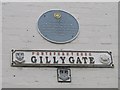
Gillygate First recorded about 1240. The street leading to St. Giles Church and formerly the main approach to the town from the south.
Connexions, Gillygate, Pontefract, United Kingdom
Subjects

On this site formerly stood the Haslemere Manor Pound built about 1827 and demolished for highway improvement in May 1928. It lay just within the N.E. corner of the borough, the nearest boundary stone being 240 feet E. of this plate
Three Gates Lane, Haslemere, United Kingdom
Subjects
On this site, from about the mid-14th Century, stood the Hundred House of Aldwick. Courthouse and Centre for local government for tithings in the area from Aldwick to Pallant (Chichester) and across to Slindon in the east. It was evidently rebuilt after 1617 and probably fell into disuse following the reform of local government in 1894. It was demolished about 1930.
Barrack Lane Loop, Aldwick, United Kingdom
Subjects

In No 7 Hoey's Court (now demolished) about 100 feet NW of this spot it is reputed that Jonathan Swift, Dean of St Patrick's Cathedral, was born on the 30th day of Novr. 1667 He died on the 19th day of Octr. 1745
near Dublin Castle, Dublin, Ireland
Subjects

Sir Noël Coward 1899-1973 dramatist, actor and composer lived for a few years of his childhood (1906-1909) in Lenham Road. His first public appearance on stage was on July 23rd 1907 in a concert at Sutton Public Hall when he was about 8 years old.
56 Lenham Road, Sutton, London, United Kingdom
Subjects


Wat Nang Phaya Mr. Thien, the local villager had informed king Rama VI about a legendary of the temple that, it was constructed by princess Pasujadeve, the daughter of a King of China. However, there is no archaeological evidence supports the words. The temple contains a bell-shaped principal Chedi on an elevated platform. Located in front of the main Chedi was a main Vihara, which was decorated with beautiful stucco modeling. In the right direction of the temple, is a section containing the monk's living quarters, Ubosoth located at the back of the temple and two Chedis on the left side of the principal one.
Wat Nang Phaya, Si Satchanalai historical park, Sukhothai, Thailand
Toronto's Radial Railways. Electric railway services on routes radiating from Toronto began in 1889. Within 20 years Toronto and York Radial Railway Company operated lines north on Yonge Street to Sutton, with a branch to Schomberg, from the east end of Toronto to West Hill, and from Sunnyside to Port Credit. In 1917, the Toronto Suburban Railway Company completed its line from west Toronto to Guelph. It also had a route to Woodbridge. These companies operated about 115 miles of trackage. Because they failed to reach downtown Toronto, the radials fell easily prey to through inter-urban highway bus service after 1925. Most services were discontinued in the 1930's. The last, from Toronto to Richmond Hill, was abandoned in 1948.
13629 Guelph Line, Milton, ON, Canada
Subjects
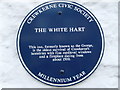
The White Hart. This inn, formerly known as the George is the oldest survival of Crewkerne's hostelries with fine medieval windows and a fireplace dating from about 1500.
The White Hart, 4 East St, Crewkerne, United Kingdom
Subjects
The Stono Rebellion (1739) The Stono Rebellion, the largest slave insurrection in British North America, began nearby on September 9, 1739. About 20 Africans raided a store near Wallace Creek, a branch of the Stono River. Taking guns and other weapons, they killed two shopkeepers. The rebels marched south toward promised freedom in Spanish Florida, waving flags, beating drums, and shouting "Liberty!" The rebels were joined by 40 to 60 more during their 15-mile march. They killed at least 20 whites, but spared others. The rebellion ended late that afternoon, when the militia caught the rebels, killing at least 34 of them. Most who escaped were captured and executed; any forced to join the rebels were released. The S. C. assembly soon enacted a harsh slave code, in force until 1865.
Savannah Highway, Berry Hill, Ravenel, SC, United States

andimgonnamisseverybody Christopher Paul Jordan, 2021, painted bronze, aluminum, and stainless steel The sculpture is a portal into places of gathering, hospitality, celebration, and care, formed by communities at the front lines of the AIDS crisis. These speakers pulsed through historic LGBTQ venues in this neighborhood and beyond. They have witnessed the raves, house parties, discos, shows, and uprisings that have sustained community in the face of catastrophic loss. These speakers are time capsules holding memories of loved ones no longer with us. Artist Christopher Jordan turns a plus sign on its side to shift thinking about HIV status. The X is a symbol for love and a symbol for the unknown. Jordan incorporates the X as a symbol connecting HIV+ and HIV- people along with the named and unnamed community members who have passed from AIDS. The X emulates the Dikenga, a Black indigenous spiritual mark spread throughout the Americas by African descendants as a compass, mapping pathways through the afterlife. The artwork invites us to honor those we have lost, to map our connections to the ongoing AIDS pandemic, and to strengthen connections between HIV+ and HIV- people. The X greets us at a crossroads of interlocking health emergencies, calling for renewed vigilance and action to end the systems of harm that place communities at risk. In a time where mass-incarceration, housing insecurity, HIV criminalization, anti-Blackness, transphobia, colonialism, sexism, and ableism deepen the impact of HIV and AIDS on targeted communities, this X is a call for transformative action. Made possible by the generosity of Carl & Renee Behnke and family, in memory of Ned Behnke Administered by the Seattle Office of Arts & Culture - City of Seattle, Mayor Jenny A. Durkan This is part of The AMP: AIDS Memorial Pathway, a place created for remembrance and reflection, to share stories, and to be a call to action to end HIV/AIDS, stigma, and discrimination. Scan the QR code to download The AMP app for a virtual tour, AIDS resources, and augmented reality artwork and interactions.
, Seattle, United States

Telthus Bakken. Forstad fra ca 1800 pa herrelos del av bymarken navn etter den militaere lagerbygning fra 1755 - det aggerske compagnies telthuus-overst ved kirken
English translation: Tent house Bakken. Suburb from about 1800 pa herrelos part of the town field name after the militaere warehouse from 1755 - the Aggeran compagnies telthuus-top at the church [AWS Translate]
Telthusbakken, Oslo, Norway

Catacombes Les anciennes carrières de la Tombe-Issoire, exploitées depuis le haut Moyen Age, ont été transformées, à partir de 1785, pour recevoir le dépôt ossuaire de l'antique cimetière des Innocents, situé près des Halles, où s'entassaient depuis des siècles les dépouilles des habitants de Paris. La Ville racheta rue Dareau une ancienne maison de a Commanderie de Saint-Jean de latran, sous laquelle fut constitué un enclos souterrain de 11000 mètres carrés: ses méandres se déroulent sur près de 1500 mètres, sous l'espace compris entre les rues Dreau, d'Alembert, Hallé et du Parc Montsouris Les ossements d'environ six millions de Parisiens sont ainsi rangés le long des galeries, en une muraille dont l'épaisseur va jusqu'à 30 mètres, le tout à environ 20 mètres sous terre. Sous la Restauration, sont venus s'y ajouter les ossements du cimetière des Errancis: entre autres ceux de Madame Elisabeth, Danton, Camille Desmoulins, Lavoisier et Robespierre, Dès le début du XIXe siècle, les Catacombes sont ouvertes au public, qui peut lire au-dessus de la porte d'entrée l'épigraphe du poète et abbé Jacques Delille: "Arrête! C'est ici l'Empire de la mort!"
English translation: Catacombs The ancient quarries of the Tomb-Issoire, exploited from the upper Middle Ages, were transformed, from 1785, to receive the ossuary repository of the ancient cemetery of the Innocents, located near the Halles, where the remains of the inhabitants of Paris had been piled for centuries. The city bought Dareau Street a former house of the Commanderie de Saint-Jean de latran, under which a 11000 square metre underground enclosure was built: its meanders take place over almost 1500 meters, under the space between the streets Dreau, Alembert, Hallé and Parc Montsouris. The bones of about six million Parisians are thus placed along the galleries, in a wall with a thickness of up to 30 meters, all about 20 meters underground. Under the Restoration were added the bones of the cemetery of the Errancis: among others those of Madame Elisabeth, Danton, Camille Desmoulins, Lavoisier and Robespierre, From the beginning of the 19th century, the Catacombs were open to the public, who can read over the front door the epigrapher of the poet and abbot Jacques Delille: “Stop! This is the Empire of Death!” [AWS Translate]
1 avenue du Colonel Henri Rol-Tanguy, Paris, France

L'Arche Marion Dès les origines, le blanchissage du linge s'effectue en bord de Seine. Vers la fin du Moyen Age, il s'organise avec l'apparition des premiers bateaux-lavoirs, simples barges à fond plat protégées des intempéries par une toiture des planches ou de chaume, à des emplacements délimités par le Prévôt. Ils sont environ 80 à la veille de la Révolution, installés de préférence sur la rive droite, mieux exposée au soleil. Supprimés en 1805 sous le prétexte qu'ils gênaient la navigation, les "bateaux-lessives" reparaissent plus nombreux sous la Restauration. Afin de lutter contre la concurrence des blanchisseries industrielles, ils accroissent leur capacité, jusqu’à devenir de véritables cités flottantes: les lavandières travaillent désormais au ras de l'eau, abritées par des auvents; à l’étage au-dessus, de vastes salles couvertes accueillent le linge prêt à sécher. Le plus imposant d'entre eux est l'Arche Marion, formé 12 barges et long de 200 mètres, amarré entre le pont d'Arcole et le pont Notre-Dame; 250 personnes peuvent y travailler ensemble.
English translation: L'Arche Marion From the beginning, laundry is done by the Seine. Towards the end of the Middle Ages, it was organized with the appearance of the first launchers, simple flat bottom barges protected from the weather by a roof of the boards or thatch, at locations delimited by the Provost. They are about 80 on the eve of the Revolution, preferably installed on the right bank, better exposed to the sun. Deleted in 1805 on the pretext that they hindered navigation, the “washing vessels” appeared more numerous under the Restoration. In order to combat the competition of industrial laundries, they increase their capacity, until they become real floating cities: lavandières now work alongside the water, sheltered by canopies; on the upper floor, large covered rooms welcome laundry ready to dry. The most imposing of them is the Arch Marion, formed 12 barges and 200 meters long, moored between the bridge of Arcole and the bridge of Notre-Dame; 250 people can work there together. [AWS Translate]
Rue d'Arcole, Paris, France

В 1805 г. поэт находился в замке Вальдау. "... Я не хочу прерывать свое слово, Хочу проповедовать и говорить Об императоре и королевстве ...
English translation: In 1805 the poet was in Waldau Castle. “... I don't want to interrupt my word I want to preach and talk About the Emperor and the Kingdom... [AWS Translate]
ул. Калининградская, 20, Гурьевский городской округ, п. Низовье, Russia
Ici vécut Georges-Arthur Desjardins (1892-1953). Passionné d’histoire et de généalogie, il publia plusieurs textes sur l’histoire de Charlesbourg et sur la paroisse de Saint-Charles- Borromée.
English translation: Here lived Georges-Arthur Desjardins (1892-1953). Passionate about history and genealogy, he published several texts on the history of Charlesbourg and the parish of Saint-Charles-Borromée. [AWS Translate]
572, boulevard Louis-XIV (Charlesbourg), Quebec, QC, Canada
Ici séjourna Howard Phillips Lovecraft (1890-1937). Célèbre auteur américain de littérature fantastique, il a écrit un texte remarquable sur Québec évoquant notamment son « parfum de douce antiquité, de quiétude et d’éternité… ».
English translation: Here stayed Howard Phillips Lovecraft (1890-1937). A famous American author of fantastic literature, he wrote a remarkable text about Quebec, evoking his “fragrance of sweet antiquity, tranquility and eternity...”. [AWS Translate]
801, avenue De Bougainville (La Cité-Limoilou), Quebec, QC, Canada

Aussichtsturm auf dem Pfannenbergkopf Mehr als 100 Jahre alt ist diese Stahlkonstruktion, die ursprünglich der Erzgrube Pfannenberger Einigkeit als Förderturm diente. Heimatfreunde in Salchendorf und Eiserfeld setzten sich dafür ein, das 1932 abgebrochene Gerüst als Aussichtsturm zu nutzen. 1934 wurde der fast 20 Meter hohe und etwa 13 Tonnen schwere Turm hier am Hauberg Eiserfeld (499 Meter über NN) errichtet. 1976 ging der Turm in das Eigentum des Sauerländischen Gebirgsvereins über, auf dessen Initiative der Turm 1995 unter Denkmalschutz gestellt und im Sommer 1999 grundlegend saniert wurde. Unterstützt wurden die Vereine dabei von privaten Spendern, aus Öffentlichen Mitteln und von der Nordrhein-Westfalen-Stiftung – Naturschutz, Heimat- und Kulturpflege. 8. August 1999 SGV – Sauerländer Gebirgsverein, Bezirk Siegerland e.V.
English translation: lookout tower on the Pfannenberkopf This steel structure, which originally served as a production tower for the Pfannenberger Einigkeit ore mine, is more than 100 years old. Heimatfreunde in Salchendorf and Eiserfeld worked to use the scaffolding demolished in 1932 as a lookout tower. In 1934, the tower, which was almost 20 metres high and weighing about 13 tonnes, was built here on the Hauberg Eiserfeld (499 metres above sea level). In 1976, the tower became the property of the Sauerland Mountain Association, on whose initiative the tower was listed as a historic monument in 1995 and was completely renovated in the summer of 1999. The associations were supported by private donors, public funds and the North Rhine-Westphalia Foundation — nature conservation, homeland and cultural preservation. August 8, 1999 SGV — Sauerland Mountain Association, District Siegerland e.V. [AWS Translate]
Pfannenberg, Siegen, Germany

Place de la collégiale. Ici se situait jusqu'en 1874 la place centrale de Saint-Marcel, village fortifié, puis faubourg de Paris annexé sous Louis XV. C'était un ancien cloître, joignant depuis le XIe siècle la collégiale Saint-Marcel et l'église Saint-Martin. Recouverte par le boulevard Saint-Marcel, elle consistait en un rectangle parallèle à l'actuelle des Gobelins, d'environ 70 mètres par 45. La "ville" Saint-Marcel - ou Saint-Marceau - fondée au Ve siècle, s'étendit en cercles successifs de la Bièvre à la rue de la Reine-Blanche, puis à la rue Le Brun. Vignobles à l'est, carrières au sud, bouchers, tanneurs au nord, puis brasseurs, teinturiers et tapissiers à l'ouest assuraient une richesse qui ne dura guère au delà du XVIIe siècle.
English translation: College Square. Here was until 1874 the central square of Saint-Marcel, fortified village, then suburb of Paris annexed under Louis XV. It was an ancient cloister, joining the collegiate church of Saint Marcel and the church of Saint Martin since the 11th century. Covered by Boulevard Saint-Marcel, it consisted of a rectangle parallel to the present Gobelins, about 70 meters by 45 meters. The “town” of Saint-Marcel - or Saint-Marceau - founded in the 5th century, spread in successive circles from the Bièvre to the rue de la Reine-Blanche and then to the rue Le Brun. Vineyards to the east, quarries to the south, butchers, tanners to the north, then brewers, tinters and tapissiers to the west ensured a wealth that lasted hardly beyond the seventeenth century. [AWS Translate]
83 Boulevard Saint Marcel, Paris, France

Le Collège de France. En 1530, François 1er, conseillé par Guillaume Budé et son entourage humaniste, nomme six lecteurs royaux (deux pour le grec, trois pour l'hébreu, un pour les mathématiques) indépendants de l'Université. "Basti en hommes, non en pierres", le "Collegium regium Galiarum" voit sa construction encore ralentie par l'assassinat de Henri IV: âgé de 9 ans, Louis XIII pose en 1610 la première d'un édifice, repris par Chalgrin en 1773. A la fin de l'ancien régime, il compte une vingtaine de chaires, où trouvent place tous les enseignements novateurs, au point de lui donner figure de modèle pour la réorganisation de l'enseignement projetée sous la Révolution. Agrandi au XIXe siècle, il s'étend de nouveau au XXe siècle pour faire face au développement de ses laboratoires.
English translation: The College of France. In 1530, François 1er, advised by Guillaume Budé and his humanist entourage, appointed six royal readers (two for Greek, three for Hebrew, one for mathematics) independent of the University. “Basti en hommes, non en pierres”, the “Collegium regium Galiarum” saw its construction further slowed down by the assassination of Henry IV: aged 9, Louis XIII laid in 1610 the first of a building, taken over by Chalgrin in 1773. At the end of the former regime, he had about 20 chairs, which included all the innovative teachings, to the point of giving him a model for the reorganization of the education planned under the Revolution. Enlarged in the 19th century, it stretches back to the 20th century to cope with the development of its laboratories. [AWS Translate]
11 Place Marcelin Berthelot, Paris, France

Le Bon Marché. L'expansion économique et sociale de la seconde moitié du XIXe siècle favorise la création des grands magasins dont le Bon Marché, immortalisé par Zola dans "Au Bonheur des Dames", est l'exemple le plus frappant. A partir de 1863, Aristide Boucicaut, propriétaire d'un magasin de nouveautés rue de Sèvres, développe et étend son entreprise sur les terrains de l'ancien hospice des Petits-Ménages. Les charpentes métalliques conçues par Eiffel, les verrières de l'architecte Boileau procurent une sensation d'espace et de légèreté; le décor intérieur donne aux clientes l'impression d'entrer dans un palais. Simultanément, Boucicaut fait preuve, à l'égard du personnel, de préoccupations sociales très avancées pour l'époque, oeuvre poursuivie par son épouse après sa mort.
English translation: The Good Market. The economic and social expansion of the second half of the 19th century favoured the creation of department stores whose Bon Marché, immortalized by Zola in “Au Bonheur des Dames”, was the most striking example. From 1863, Aristide Boucicaut, owner of a new store rue de Sèvres, developed and extended his business on the grounds of the former hospice of the titles-Ménages. The metal frames designed by Eiffel, the glass panels of architect Boileau provide a feeling of space and lightness; the interior decor gives clients the impression of entering a palace. At the same time, Boucicaut displayed very advanced social concerns about the staff at the time, a work pursued by his wife after his death. [AWS Translate]
rue du Bac and rue de Babylone, Paris, France

Colonnes du Trône. Afin d'empêcher la fraude à l'octroi, les Fermiers généraux firent édifier un mur autour de Paris et confièrent à Ledoux la construction de pavillons aux barrières d'entrée. Celle du Trône était constituée de deux guérites encadrant une grille d'environ 60 mètres et servant de piédestal à des colonnes de 28 mètres de haut. A l'est, deux pavillons identiques abritaient les bureaux et logements des commis de l'octroi. En 1845, les colonnes furent surmontées de deux statues de 3 mètres 80 de hauteur: Philippe Auguste sculpté par Dumont dans le douzième et saint Louis par Etex dans le onzième arrondissement.
English translation: Columns of the Throne. In order to prevent grant fraud, the General Farmers built a wall around Paris and entrusted Ledoux with the construction of pavilions at the gates of entry. The throne was made up of two guerrillas framing a grid of about 60 meters and serving as a pedestal at columns of 28 meters high. In the east, two identical pavilions housed the offices and dwellings of grant clerks. In 1845, the columns were surmounted by two statues of 3 meters 80 height: Philippe Auguste sculpted by Dumont in the twelfth and Saint Louis by Etex in the eleventh arrondissement. [AWS Translate]
Place de l'île de la Réunion, Paris, France

Le Pletzl. Fuyant les persécutions, les Juifs ashkénazes commencent d'affluer en France à partir de 1881. Ils se logent à Paris après de leurs coreligionnaires établis surtout dans le Marais. En 1900, environ 6000 personnes sont arrivées de Roumanie, Russie et Autriche-Hongrie, 13000 autres jusqu'en 1914. Installés en nombre dans les rue des Ecouffes, Ferdinand-Duval (nommée rue des Juifs jusqu'en 1900) et des Rosiers, ils y constituent le "pletzl", la "petite place" en yiddish, et créent l'Ecole israélite du Travail au 4 bis de la rue des Rosiers. La vie de cette communauté a été évoquée dans "les Eaux mêlées" de Roger Ikor. Plus de la moitié d'entre eux ont péri dans les camps de concentration nazis.
English translation: The Pletzl. Away from persecution, Ashkenazi Jews began to flock to France in 1881. They stay in Paris after their fellow religionists settled mainly in the Marais. In 1900, about 6000 people arrived from Romania, Russia and Austria-Hungary, another 13000 until 1914. Set up in numbers on Rue des Ecouffes, Ferdinand-Duval (named Rue des Jeifs until 1900) and des Rosiers, they constitute the “pletzl”, the “small square” in Yiddish, and create the Israeli School of Labour at 4 bis of Rue des Rosiers. The life of this community was evoked in Roger Ikor's “Mixed Waters”. More than half of them died in Nazi concentration camps. [AWS Translate]
corner of rue Ferdinand Duval & rue des Rosiers, Paris, France

La verrerie à bouteilles. Sur l'emplacement de cette esplanade et de la Bibliothèque de France se trouvait, entre 1792 et 1848, une verrerie à bouteilles, premier établissement industriel du quartier de la Gare. Fondée par Saget de Maker, ancien régisseur de la Manufacture de Sèvres, l'usine fabrique des bouteilles à col large, primées à l'Exposition française de 1802, des cloches de jardin, et des vitres troubles teintées de vert, "façon d'Alsace". Elle possède trois fours, et emploie en 1816 une centaine d'ouvriers. Après le retrait de Saget en 1823, la production baisse, et les bâtiments sont loués en 1847 à la Compagnie des chemins de fer d'Orléans, qui les détruit aussitôt pour agrandir sa gare de marchandises.
English translation: Bottle glassware. Between 1792 and 1848, on the site of this esplanade and the Bibliothèque de France, there was a glass bottle, the first industrial establishment in the Gare district. Founded by Saget de Maker, former manager of the Manufacture de Sèvres, the factory manufactures bottles with a wide neck, awarded at the French Exhibition of 1802, garden bells, and turbid windows tinted with green, “Alsace's way”. It has three ovens, and in 1816 employs about 100 workers. After Saget's withdrawal in 1823, production declined, and the buildings were rented in 1847 to the Orléans Railway Company, which immediately destroyed them to expand its freight station. [AWS Translate]
Quai François Mauriac at rue Raymond Aron, Paris, France

Pierre PoivrePierre Poivre, 1719 - 1786. Séjourna ici avant son départ pour la Chine le 17 janvier 1740 a bord du vaisseau Mars. Nommé par Louis XV Intendant des isles de France (Île Maurice) et de Bourbon (la Réunion), il résida a lÎe Maurice de 1767 à 1772. Il y créa le célèbre "Jardin des Pamplemousses". Passionné de botanique, il voulut engager la France dans le commerce des épices et les introduire à l'Île Maurice. Grâce à Pierre Poivre, le muscadier, le giroflier, le cannellier et autres épices y furent acclimatés, mais également à lÎe de la Réunion, aux Seychelles et aux Antilles.
English translation: Pierre PoivrePierre Poivre, 1719 - 1786. Séjourna here before his departure to China on 17 Jan. 1740 aboard the Mars ship. Appointed by Louis XV Intendant of the Isles of France (Mauritius) and Bourbon (Réunion), he resided in Mauritius from 1767 to 1772. There he created the famous “Garden of Grapefruit”. Passionate about botany, he wanted to engage France in the spice trade and introduce them to Mauritius. Thanks to Pierre Poivre, the muscadier, the frog, the cinnamon and other spices were acclimatized, but also in Reunion Island, the Seychelles and the Caribbean. [AWS Translate]
128 rue du Bac, Paris, France
Altes Rathaus Hier befand sich etwa von 1230-1453 ein erstes Bauwerk, aus dem in den folgenden Jahren des 15. Jahrhundert dieses Rathaus entstand. 1875-1881 wurde es von Conrad Wilhelm Hase restauriert und erweitert. 1943 brannte es aus und wurde von 1953-1964 wieder aufgebaut.
English translation: Old Town Hall Here, about 1230-1453, there was a first building from which this town hall was built in the following years of the 15th century. In 1875-1881 it was restored and expanded by Conrad Wilhelm Hase. In 1943 it burned out and was rebuilt from 1953-1964. [AWS Translate]
Schmiedestraße, Hannover, Germany
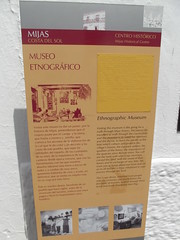
Museo Etnografico Visitar este museo es dar un paseo por la historia de Mijas, pretendemos que el viajero pasee por el campo y la sierra, que huela a romero y tomillo, que conozca los secretos de la elaboracion de la cal que le da color y proteccion a las casas de este pueblo, que sepa las utilidades del esparto, de las cualidades de su miel, de la importancia de sus canteras desde epoca romana, que vea las herramientas con las que nuestros abuelos labraron esta tierra a fuerza de sudor y a cambio de muy poco, queremos hablarles de vino y aceite, en definitiva, que se sienta un mijeno mas en su viaje por esta tierra. Este es nuestro deseo, heredado de un pueblo que hace siglos, antes de la invencion del turismo, anduvo por estos pagos y llevo la hospitalidad como bandera.
English translation: Ethnographic Museum Visiting this museum is a walk through the history of Mijas, the traveler claim we stroll through the countryside and the mountains, that smells of rosemary and thyme, who knows the secrets of elaboration of the lime adds color and protection to the homes of these people, you know utilities esparto, the qualities of their honey, the importance of its quarries from Roman times, you see the tools with which our grandparents tilled this land of sweat and hard for very little, they want to talk about wine and oil, in short, you feel a Mijas inhabitant in your journey through this land. This is our desire, legacy of a people who for centuries before the invention of tourism, and walked through these payments and hospitality as carry flag.
Casa Museo - Calle Malaga, Mijas, Spain
Subjects

Peter Paul Rubens geb. 1577 in Siegen Wie um die Wiege Homers nach Jahrhunderten sieben der Städte / Also stritten um dich, Rubens, der Städte sich drei / Doch Antwerpen und Köln, den zweiten Maler der Erde / Sich zueignend als Sohn, fügten sich endlich dem Spruch: / "Siegen zeigte zuerst ihm die Welt im Reize der Farben, / Die sein Pinsel wie Sol hinter Auroren verteilt; / Raphael sei der Demant, dem Rubin bist du zu vergleichen / Fürst der batavischen Kunst, Rubens, und Siegener auch." / Mutter Heimat, die ich als Seliger segne, so nimm denn / Hier aus Elysium rief's, freundlich die kindliche Hand! Antwerpen 1589-1640 - Siegen 1577-1578 - Köln 1578-1588 - 1855 L.H.H.L. - 1935 H.Kuhmichel -
English translation: Peter Paul Rubens, born 1577 in Siegen What about the cradle of Homer after centuries seven of the cities/ So quarreled over you, Rubens, the cities turned three/ But Antwerp and Cologne, the second painter of the Earth/ Approaching as a son, finally added to the saying:/ “Wins first showed him the world in the charms of colors,/ Spread his brush behind aurors like Sol;/ Raphael be the demant, you can compare the ruby/ Prince of Batavian art, Rubens, and victorious too. “/ Mother's homeland, whom I bless as a blessed, so take/ Here from Elysium, it kindly scambed the childish hand! Antwerp 1589-1640 - Wins 1577-1578 - Cologne 1578-1588 - 1855 L.H.H.L. - 1935 H.Kuhmichel [AWS Translate]
Schlosspark, Siegen, Germany
Subjects

Stellvertretend für all jene, die sich um die Bewahrung und Überlieferung der Rhodter Ortsgeschichte verdient gemacht haben, danken wir namentlich: Heinrich W. J. Runck Dr. Karl Steigelmann Dr. Wilhelm Steigelmann Günter und Godelinde Baumann Ortsgemeinde Rhodt
English translation: Representing all those who care about the preservation and transmission of Rhodter local history earned We would like to thank in particular: Heinrich W. J. Runck Dr. Karl Steigelmann Dr. Wilhelm Steigelmann Günter and Godelinde Baumann Municipality of Rhodt [AWS Translate]
, Rhodt unter Rietburg, Germany
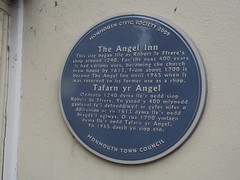
Tafarn yr Angel Oddeutu 1240 dyma lle'r oedd siop Robert de Ffrere. Yn ystod y 400 mlynedd ganlynol fe'i defnyddiwyd ar gyfer nifer o ddibenion ac yn 1613 dyma lle'r oedd bragdy'r eglwys. O tua 1700 ymlaen dyma lle'r oedd Tafarn yr Angel. Yn 1965 daeth yn siop eto.
English translation: The Angel Inn This site began life as Robert le Ffrere's shop around 1240. For the next 400 years it had various uses, becoming the church brew house by 1613. From about 1700 it became The Angel Inn until 1965 when it was returned to its former use as a shop.
The Angel Hotel - St Mary's Street, Monmouth, United Kingdom
Subjects
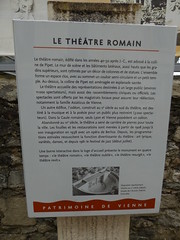
Le Théâtre Romain Le théâtre romain, édifié dans les années 40-50 après J.-C., est adossé à la colline de Pipet. Le mur de scène et les bâtiments latéreaux, aussi hauts que les gradins supérieurs, sont rythmés par un décor de colonnes et de statues. L'ensemble forme un espace clos, avec au sommet un couloir semi-circulaire et un petit temple. Au-dessus, la colline de Pipet est aménagée en esplanade sacrée. Le théâtre accueille de représentations destinées à un large public (environ 11000 spectateurs), mais aussi des rassemblements civiques ou officiels. Les spectacles sont offerts par les magistrats locaux pour assurer leur réélection, notamment la famille Astiaticus de Vienne. Un autre édifice l'odéon, construit au IIe siècle au sud du théâtre, est destiné à la musique et à la poésie pour un public plus restreint (2000 spectateurs). Dans le Gaule romaine, seuls Lyon et Vienne possédent un odéon. Abandonné au IVe siècle, le théâtre a servi de carrière de pierres pour toute la ville. Les fouilles et les restaurations sonts menées à partir de 1908 jusqu'à son inauguration en 1938 avec un opéra de Berlioz. Depuis, les programmations estivales ressuscient la fonction divertissant du théâtre : art lyrique, variétés, danses, et depuis 1981 le festival de jazz (début juillet). Une borne interactive dans la log d'accueil présente le monument en quatre temps : «le théâtre romain», «le théâtre oublié», «le théâtre resurgit», «le théâtre revit»
English translation: The Roman Theatre The Roman theatre, built in the years 40-50 AD, is leaned against the hill of Pipet. The stage wall and lateral buildings, as tall as the upper tiers, are punctuated by a decor of columns and statues. The whole forms an enclosed space, with at the top a semicircular corridor and a small temple. Above, the hill of Pipet is arranged as a sacred esplanade. The theatre hosts performances for a large audience (about 11,000 spectators), as well as civic or official gatherings. The shows are offered by local magistrates to ensure their re-election, especially the Astiaticus family in Vienna. Another building, the Odeon, built in the 2nd century to the south of the theatre, is destined for music and poetry for a more limited audience (2000 spectators). In Roman Gaul, only Lyon and Vienna have an odeon. Abandoned in the 4th century, the theatre served as a stone quarry for the whole city. Excavations and restorations were carried out from 1908 until its inauguration in 1938 with an opera by Berlioz. Since then, the summer programs have resurrected the entertaining function of the theatre: lyrical art, variety, dance, and since 1981 the jazz festival (early July). An interactive kiosk in the welcome log presents the monument in four stages: "the Roman theatre", "the forgotten theatre", "the theatre re-emerges", "the theatre revives"
Rue du Cirque, Vienne, France