
Places, subjects, or plaques matching "Great War"
1 organisation matching "Great War"
Aldridge Great War Project
1 plaque2 subject matching "Great War"
55 plaque matching "Great War"

To record the use of these premises as a rest room for the sick and wounded during the Great War, and the thanks of the Scottish Branch British Red Cross Society to the generous donors. April, 1919.
Edinburgh Waverley railway station, Edinburgh, United Kingdom
Erected by the Employees of The Coventry Chain Co In Memory of their 45 comrades who fell in the Great War 1914-1918
The Koco Building, Arches Industrial Estate, Spon End, Coventry, United Kingdom
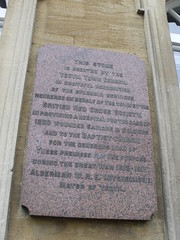
This stone is erected by Yeovil Town Council in grateful recognition of the splendid services rendered on behalf of the town by the British Red Cross Society in providing a hospital for the care of 1200 wounded sailors & soldiers and to the Baptist Church for the generous loan of these premises for the purpose during the Great War 1915-1919. Alderman W. R. E. Mitchelmore - Mayor of Yeovil
Newnam Memorial Block, South Street, Yeovil, United Kingdom
Subjects


In honour of the patriotic women of the Horsham War Hospital Supply Depot who worked in this house during the Great War 1914-1918
, Horsham, United Kingdom

"this fountain is the gift of the late j. f. archibald to his fellow countryman and is intended in terms of his will to commemorate the association of australian and france in the great war 1914-1918. it was erected in 1932 and is the work of francois sicard, sculptor, paris."
, Sydney, New South Wales, Australia
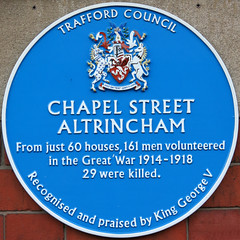
Chapel Street Altrincham. From just 60 houses 161 men volunteered in the Great War 1914-18. 29 were killed. Recognised and praised by King George V.
Chapel Street, Altrincham, United Kingdom
Subjects
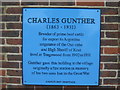
Charles Gunther (1863 - 1931) Breeder of prime beef cattle for export to Argentina originator of the Oxo cube and High Sheriff of Kent lived at Tongswood from 1902 to 1931 Gunther gave this building to the village originally a fire station in memory of his two sons lost in the Great War
Rye Road, Hawkhurst, United Kingdom
Subjects

George Phillips 1857-1924 lived here. Historian publisher county organiser & compiler of "Rutland and the Great War"
, Oakham, United Kingdom
Subjects

The British Red Cross Society and the Order of Saint John gratefully acknowledge that this building was converted and used as an auxiliary hospital worked by a voluntary staff during the great war.
The Priory, Ware, United Kingdom
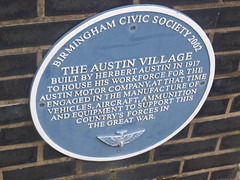
The Austin Village built by Herbert Austin in 1917 to house his workforce for the Austin Motor Company, at that time engaged in the manufacture of vehicles, aircraft, ammunition and equipment to support this country's forces in the Great War.
Central Avenue, The Austin Village, Northfield, Birmingham, United Kingdom
Subjects


Wentworth House Built in 1803 by Barrister and educationalist John Pemberton Heywood as a family home. Since September 1878 the building has been home to Wakefield Girls' High School. Between 1917-1919 it served as St. John's Auxiliary Hospital housing casualties from the Great War.
Wentworth Street, Wakefield, United Kingdom
Subjects


The War Memorial On instigation in 1921 by Harald Thesen, a veteran of the First World War, a subscription list was opened and £450 was collected towards a war memorial to honour those who had lost their lives in the service of their country. Designed by architect Charles Walgate of Cape Town and built by John Donald of Knysna from stone quarried on the Brenton Hills, the memorial included a two-edged bronze sword and wreath designed by Marlon Walgate and a bronze plaque by HG Stevens, listing the names of the fallen. The War Memorial was unveiled on 17 December 1922 by The Reverend Captain Alfred Duthie, M.C., Chaplain to the Forces in Flanders and France during The Great War. Plaques bearing the names of the deceased from the Second World War and the Bush War have been added.
Main Road, Knysna, South Africa

The new St. George's Church In April 1919 during the incumbency of the Rev. B.C. Mortimer, a resolution by the parishioners was taken to build a new church which would also serve to be a living monument to those that had died during the Great War 1914-1918. The project came to a halt in 1922 when initial tenders revealed a severe shortage of funds, and it was only in September 1926 that the foundation stone was laid by the Rt. Rev. Bishop Henry Sidwell, DD, Lord Bishop of George. The design of the church, to accommodate a congregation of 250, was by architects Simpson & Bridgman of Oudtshoorn, the tender offer of £6300 was accepted and the builder was J. Donald of Knysna. The building was completed by a Building Committee. To raise additional funds, glebe lands in Vootrekker Road and Paradise Farm were sold, and after many setbacks, the first service in the new church was held in 1928. The Rt. Rev. Bishop Herbert L. Gwyer consecrated the church in 1937 when all the debts had been settled.
Main Road, Knysna, South Africa

Pte Sidney Godley 1889-1957 Awarded the first V.C. of the Great War 23rd August 1914 Lived here
164 Torrington Drive, Loughton, United Kingdom
Subjects


"My subject is war, and the pity of war. The poetry is in the pity." On 13th October 1917 three poets of the Great War met at Baberton Golf Club, Juniper Green Wilfred Owen, Siegfried Sassoon, Robert Graves This plaque was unveiled 100 years later by the Rt Hon Lord Provost of the City of Edinburgh Frank Ross, local historian Neil McLennan and local residents in remembrance of that meeting and the fallen of World War One 1914-1918 Plaque kindly donated by Specialized Signs, Edinburgh
55 Baberton Avenue, Edinburgh, United Kingdom
Subjects
.jpg?width=250)


To commemorate the centenary of the Great War August 4th 1914 - November 11th 1918 if not for them who fought and fell what would life hold today that we might live in peace and love they gave their yesterday
Shirley Park - Stratford Road, Shirley, Solihull, United Kingdom
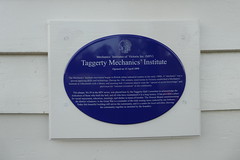
MIV Historical Plaques Program #0059
Taggerty Mechanics' Institute. Opened on 15 April 1898. The Mechanics' Institute movement began in British urban industrial centres in the early 1800s. A "mechanic" was a person applying skills and technology. During the 19th century, most towns in Victoria established a Mechanics' Institute or Athenaeum with a library and meeting hall. Common objects were the "spread of useful knowledge" and provision for "rational recreation" in the community. This plaque, No. 59 in the MIV series, was placed here by the Taggerty Hall Committee to acknowledge the dedication of those who built the hall, and all who have maintained it in a long history. It has provided a place for social enjoyment, education, meetings, and shelter in times of trouble. The Honour Board commemorating the district volunteers in the Great War is a reminder of the truly testing times endured by our forbears. Today this beautiful building still serves the community, and is a centre for local activities, drawing the community together as intended by the founders.
5 Taggerty-Thornton Rd, Taggerty, Australia
Subjects

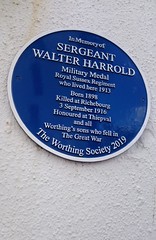
In memory of Sergeant Walter Harrold. Military Medal. Royal Sussex Regiment who lived here 1913. Born 1898. Killed at Richebourg 3 September 1916. Honoured at Thiepval and all Worthing's sons who fell in The Great War.
Montague Place, Worthing, United Kingdom
Subjects

This building was used as the Headquarters of a Hospital for sick and wounded soldiers during the Great War. It was manned by Gloucestershire Voluntary Aid Detachment No 102 and was open from 28 Oct, 1914 to 28 Feb, 1919 during which period 3048 cases were treated
Town Hall, Church Road, Lydney, United Kingdom

Inter Arma Caritas This building was used as a hospital for sick and wounded soldiers during the great war. It was manned by Gloucestershire Voluntary Aid Detachments Nos 38 & 60 and was open from 21 Oct, 1914 to 29 Mar, 1919 during which period 4822 cases were treated
Great Western Road, Gloucestershire, United Kingdom

Bridge Street The 'River of Life' design in Bridge Street depicts the course of the River Mersey as it flows through the Borough of Warrington from Hollins Green and Rixton (at Market Gate) to Penketh (close to Rylands Street). Along the course of the River, twelve bronze disca, designed by local primary school children, detail themes of nature, local history and geography. The scheme was designed by the artist Stephen Broadbent in partnership with Warrington Borough Council. The central water feature is, in part, a memorial to two local children who died following the terrorist bomb explosion in Bridge Street in 1993. Young people from the Great Sankey High School helped the artist with the design work. Seats in the street feature themes detailing Warrington's industries, past and present, including metal working, wire making and tool manufacturing. The lighting columns incorporate motifs taken from Warrington Town Hall gates and the Coat of Arms of families influential in the history of the town. The scheme was implemented by Warrington Borough Council and opened by HRH The Duchess of Kent on 14th November 1996.
65 Bridge Street, Warrington, United Kingdom
On the night of August 12, 1814, seventy seamen and marines, led by Captain Alexander T. Dobbs, R.N., embarked in this vicinity to attempt the capture of three armed U.S. schooners lying off American-held Fort Erie. One of the six boats used had been carried some 40 km from Queenston, while the others were brought overland from Frenchman's Creek. Masquerading as supply craft, the force boarded and seized the "Somers" and "Ohio", the "Porcupine" alone escaping. Two of the attackers, including their second-in-command, Lieutenant Copleston Radcliffe, R.N., were killed. This daring exploit was the last naval action fought on the Great Lakes during the War of 1812.
Queen's Circle, Crystal Beach, ON, Canada

The Old Fire Station Rotherhithe Restored by Barratt in memory of the crews of this station who served with great valour particularly during the Second World War. Opened by Sir George Young Bt MP, Minister for Housing, Inner Cities and Constructions, on 25th November 1993
241 Rotherhithe Street, London, United Kingdom
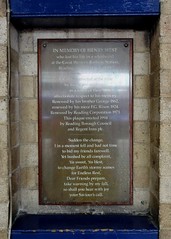
In memory of Henry West who lost his life in a whirlwind at the Great Western Railway Station, Reading on 24th March, 1840. A rail was erected at the time by his fellow workmen as a token of their affectionate respect to his memory. Renewed by his brother George 1862, renewed by his niece F.G. Rixon 1924. Renewed by Reading Corporation 1971. Sudden the change, I in a moment fell and had not time to bid my friends farewell. Yet hushed be all complaint 'tis sweet, 'tis blest, to change Earth's stormy scenes for Endless Rest, Dear Friends prepare, take warning by my fall, so shall you hear with joy, your Saviour's call.
Platform 7, Reading Railway Station, Reading, United Kingdom
Subjects
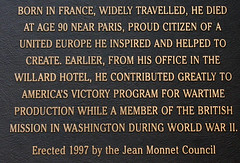
Jean Monnet 1888-1979. Born in France, widely travelled, he died at age 90 near Paris, proud citizen of a united Europe he inspired and helped to create. Earlier, from his office in the Willard Hotel, he contributed greatly to America's victory program for wartime production while a member of the British Mission in Washington during World War II.
Willard Intercontinental Hotel, 1401 Pennsylvania Avenue Northwest, Washington, DC, United States
Subjects
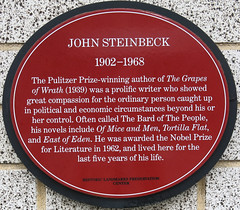
John Steinbeck 1902-1968 The Pulitzer Prize-winning author of The Grapes of Wrath (1939) was a prolific writer who showed great compassion for the ordinary person caught up in political and economic circumstances beyond his or her control. Often called The Bard of The People, his novels include Of Mice and Men, Tortilla Flat, and East of Eden. He was awarded the Nobel Prize for Literature in 1962, and lived here for the last five years of his life.
190 East 72nd Street, NY 10021, New York, NY, United States
Subjects

Kempton Great Engines Designed by the Metropolitan Water Board under the direction of Henry Stilgoe. these two triple expansion engines were manufactured by Worthington-Simpson at Newark-on-Trent and commissioned in 1928. They provided clean water to the people of London for 50 years. Engine No. 6 (known as The Sir William Prescott) is the largest working steam engine in the world.
Kempton Park Water Treatment Works, Snakey Lane, Hanworth TW13, London, United Kingdom
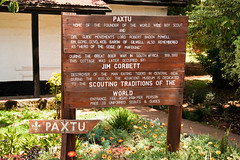
Paxtu Home of the founder of the world wide Boy Scout and Girl Guide movements Lord Robert Baden Powell OM, GCMG, GCVO, KCB. Baron of Gilwell also remembered as "Hero of the seige of Mafeking" during the Great Boer War in South Africa 1891-1900 This cottage was later occupied by Jim Corbett destroyer of the man eating tigers in central India during the 1920-30C The adjacent museum is dedicated to the Scouting traditions of the world.
Near Outspan Hotel, Nyeri, Kenya
Subjects
.png?width=250)

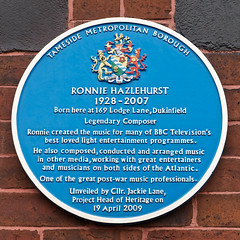
Ronnie Hazlehurst 1928-2007 Born here at 169 Lodge Lane, Dukinfield Legendary Composer Ronnie created the music for many of BBC Television's best loved light entertainment programmes. He also composed, conducted and arranged music in other media, working with great entertainers and musicians on both sides of the Atlantic. One of the great post-war music professionals.
169 Lodge Lane, Dukinfield, United Kingdom
Subjects
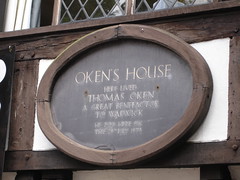
Oken's House Here lived Thomas Oken a great benefactor to Warwick He died here on the 29th July 1573
Castle Mews, Warwick, United Kingdom
Subjects
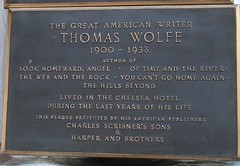
The great American writer Thomas Wolfe 1900 - 1936 author of Look Homeward, Angel, Of Time And The River, The Web And The Rock, You Can't Go Home Again, The Hills Beyond lived in the Chelsea Hotel during the last years of his life. This plaque presented by his American publishers Charles Scribner's Sons & Harper and Brothers
Hotel Chelsea, 222 West 23rd Street, New York, NY, United States
Subjects


Walmgate Bar. Probably built in the reign of Edward I. The wood and plaster building on the inner side is of the Elizabethan period. This Bar was greatly damaged during the siege of York 1644 by Parliamentarians' battery fire from Lamel Hill. The portcullis and gates remain and this Bar alone retains its barbican which was erected in the reign of Edward III. The Arms of Henry V are on the outer side. The Bar was restored in 1648 and completely renovated in 1959.
Walmgate Bar, York, United Kingdom
Subjects
Formerly the great lodging of Scots medieval Kings. Re-built by Alexander, 1st Lord Duffus c1650. Prince Charles Edward Stuart stayed here in 1746, prior to Culloden.
Thunderton Place, Elgin, United Kingdom
Здесь в 1963-1979 годах первым директором школы № 23 работал ветеран Великой Отечественной войны, ветеран труда АКИНФИЕВ Петр Андреевич Мемориальная доска установлена в 2018 году к 55-летию школы
English translation: Here in 1963-1979 the first director of school No. 23 worked as a veteran of the Great Patriotic War, veteran of labor AKINFIEV Pyotr Andreevich A memorial plaque installed in 2018 for the school's 55th anniversary [AWS Translate]
Goncharova, 8, Димитровград - Dimitrovgrad, Russia

УМВД России по Калининградской области. В этом здании с 1970 по 1988 гг. трудился участник Великой Отечественной войны генерал-майор милиции Щербаков Александр Иванович. Руководитель и организатор бескомпромиссной борьбы с преступностью в Янтарном крае. Твоя жизнь - для нас пример
English translation: UMVD of Russia in the Kaliningrad region. In this building from 1970 to 1988 the participant of the Great Patriotic War, the militia major general Shcherbakov Alexander Ivanovich worked. Head and organizer of uncompromising fight against crime in the Amber region. Your life is an example for us [AWS Translate]
Советский проспект 7, Калининград - Kaliningrad, Russia

В этом доме с 1976 по 1998 г. жила участница Великой Отечественной войны, журналистка, писательница, автор любимой калининградцами книги "Девочка идет на войну" Маргарита Геннадьевна Родионова (1924-1998)
English translation: In this house from 1976 to 1998 lived a participant of the Great Patriotic War, journalist, writer, author of the beloved book “The girl goes to war” Margarita Gennadyevna Rodionova (1924-1998) [AWS Translate]
Пугачёва 22, Калининград - Kaliningrad, Russia

Улица названа в память об участнике Великой Отечественной войны Герое Советского Союза Козенкове Василии Георгиевиче 1923-1945 гг.
English translation: The street is named in memory of the participant of the Great Patriotic War Hero of the Soviet Union Kosenkov Vasily Georgievich 1923-1945. [AWS Translate]
Зои Космодемьянской 37, Калининград - Kaliningrad, Russia

Улица названа в память об участнике Великой Отечественной войны Герое Советского Союза Космодемьянской Зои Анатольевны 1923-1941 гг.
English translation: The street is named in memory of the participant of the Great Patriotic War Hero of the Soviet Union Cosmodemyanskaya Zoe Anatolyevna 1923-1941. [AWS Translate]
Зои Космодемьянской 26, Калининград - Kaliningrad, Russia

В этом доме жил Герой Советского Союза капитан первого ранга Афанасий Иванович Иванников. Активный участник Великой Отечественной войны 1941-1945 г.г.
English translation: In this house lived Hero of the Soviet Union Captain of the first rank Athanasiy Ivanovich Ivannikov. Active participant of the Great Patriotic War of 1941-1945 [AWS Translate]
Красная 36, Калининград - Kaliningrad, Russia

Улица названа в память об участнике Великой Отечественной войны Герое Советского Союза Ротко Федоре Никитовиче 1923-1951 гг.
English translation: The street is named in memory of the participant of the Great Patriotic War Hero of the Soviet Union Rothko Fedor Nikitovich 1923-1951. [AWS Translate]
Богдана Хмельницкого 33-37, Калининград - Kaliningrad, Russia

Дважды Герой Советского Союза генерал армии Черняховский Иван Данилович (1906-18.2.1945). Талантливейший полководец, один из тех, кому мы обязаны победой в Великой Отечественной войне. Командовал 3-м Белорусским фронтом, погиб в бою у города Мельзак Польская Народная Республика
English translation: Twice Hero of the Soviet Union, Army General Chernyakhovsky Ivan Danilovich (1906-18.2.1945). Talented commander, one of those to whom we owe victory in the Great Patriotic War. Commanded 3rd Belarusian Front, killed in battle near Melzak city of Polish People's Republic [AWS Translate]
Черняховского 4а, Калининград - Kaliningrad, Russia

Улица названа в память об участнике Великой Отечественной Войны Герое Советского Союза Назаровой Клавдии Ивановны 1922-1942 г.г.
English translation: The street is named in memory of the participant of the Great Patriotic War Hero of the Soviet Union Nazarova Claudia Ivanovna 1922-1942. [AWS Translate]
Клары Назаровой 59, Калининград - Kaliningrad, Russia

Улица названа в память об участнике Великой Отечественной войны, Герои Советского Союза генерал-майоре авиации Павлове Павле Ивановиче 1908-1967 rr.
English translation: The street is named in memory of the participant of the Great Patriotic War, Heroes of the Soviet Union, Major General of Aviation Pavlov Pavla Ivanovich 1908-1967 rr. [AWS Translate]
Генерала Павлова 10а, Калининград - Kaliningrad, Russia

Улица названа в память об участнике Великой Отечественной войны герое Советского Союза Шевцовой Любови Григорьевны 1924-1943 г.г.
English translation: The street is named in memory of the participant of the Great Patriotic War, the hero of the Soviet Union Shevtsova Lyubov Grigoryevna 1924-1943. [AWS Translate]
бульвар Любови Шевцовой 39, Калининград - Kaliningrad, Russia

За мужество и героизм проявленные в годы Великой Отечественной войны присвоить звание Герой России Гвардии сержанту Жалнину ВН Старшим Лейтенантам Шулайкиной ЛИ Гептнер ЭГ Глухареву ВЯ Москва-Кремль 1990-96 г
English translation: For courage and heroism shown during the Great Patriotic War to award the title Hero of Russia Guard to Sergeant Zhalnin VN Senior Lieutenants Shulaykina LI Geptner EG Glukharev VYA Moscow-Kremlin 1990- 96 g [AWS Translate]
Советский проспект 68, Калининград - Kaliningrad, Russia

За мужество и героизм проявленные в годы Великой Отечественной войны присвоить звание Герой России Матросову Новикову ВЛ Младшим Лейтенантам Игашову ПС Хохлачеву АМ Лейтенанту Парфенову ДГ Москва Кремль 06.07.95
English translation: For courage and heroism shown during the Great Patriotic War to award the title Hero of Russia Matrosov Novikov VL Junior Lieutenants Igashov PS Khokhlachev AM Lieutenant Parthenov DG Moscow Kremlin 06.07.95 [AWS Translate]
Советский проспект 68, Калининград - Kaliningrad, Russia

Улица названа в честь Героя Советского Союза прославленной летчицы, командира женского бомбардировочного авиационного полка в годы Великой Отечественной войны Расковой Марины Михайловны
English translation: The street is named after Hero of the Soviet Union famous pilot, commander of the women's bombing aviation regiment during the Great Patriotic War Raskova Marina Mikhailovna [AWS Translate]
ул. Марины Расковой, 4, Зеленоградский городской округ, г. Зеленоградск, Russia

В этом здании с 1962 по 1980 годы трудился ветеран Великой Отечественной войны полковник милиции Глазков Павел Алексеевич. Руководитель и организатор бескомпромиссной борьбы с преступностью в Зеленоградском районе.
English translation: A veteran of the Great Patriotic War, Pavel Glazkov Militia Colonel Pavel Alekseevich, worked in this building from 1962 to 1980. The leader and organizer of the uncompromising fight against crime in Zelenograd district. [AWS Translate]
ул. Тургенева, 4, Зеленоградский городской округ, г. Зеленоградск, Russia

Рожков Василий Николаевич (1924-2003). Директор Калининградского янтарного комбината с 1964 по 1987 годы. Участник Великой Отечественной войны и Парада Победы 1945 года в Москве. Первый Почетный гражданин Янтарного городского округа.
English translation: Rozhkov Vasily Nikolaevich (1924-2003). Director of the Kaliningrad Amber Combine from 1964 to 1987. Participant in the Great Patriotic War and 1945 Victory Parade in Moscow. First Honorary Citizen of Amber Urban District. [AWS Translate]
ул. Железнодорожная, 2, Янтарный городской округ, пгт. Янтарный, Russia

Im Mittelalter gab es hier im Löschwesen keine besondere Organisation: Im Brandfall half jeder jedem. Auf allen Hofstellen standen neben den Brunnen Löscheimer. Beim Ertönen der Feuerglocke oder der Hornsignale lief man zum Sammelplatz und schwärmte von dort zum Brandherd aus. 1743 beantragte der Amtsvogt bei der Churfürstlichen Cammer die Anschaffung einer „Feuersprütze nebst zwei Feuer-Tübben (Wasserfässer) und 7 Hakens“. Zwei Jahre später wurde ein „Sprützen-Haus“ auf dem Vogthof als Anbau an den Pferdestall von 32 Fuß Länge, 12 Fuß Breite und 12 Fuß Höhe errichtet (1 Fuß= ca. 33cm). Das Eichenholz hierfür konnte zinsfrei aus der Cananohe beschafft werden. Mitte des 19. Jahrhunderts bildeten sich freiwillige Löschvereine, die sich überwiegend aus Mitgliedern der Turnvereine rekrutierten. Als 1891 das Pastorenhaus gegenüber der Dorfkirche in Flammen aufging, gründete sich Anfang 1892 die Freiwillige Feuerwehr Langenhagen, maßgeblich mitinitiiert durch den Leiter der Heil-und Pflegeanstalt. 31 aktive und 11 passive Mitglieder hatte die Wehr. Röcke und Ausrüstung mussten die Feuerwehrmänner auf eigene Kosten beschaffen. Erst ab 1905, nachdem der Verein sich stark verschuldet hatte, übernahm die Gemeinde diese Kosten. An der Walsroder Straße Ecke Pestalozziweg auf dem Grundstück der heutigen Sparkasse wurde eine Wagenremise zum Spritzenhaus umgebaut und ein Schlauchturm errichtet, zwei neue Handspritzen und diverse Schläuche wurden angeschafft. Beide Weltkriege brachten für die Wehr große Herausforderungen. Viele Feuerwehrkameraden fielen in den Kriegen oder wurden verwundet. Besonders bei Rettungseinsätzen im II. Weltkrieg kam die Wehr an ihre Grenzen. 29 Bürger sollten mit einem sogenannten „Notdienstzug“ für Verstärkung sorgen. Durch die Vereinigung der Gemeinden Brink und Langenforth mit Langenhagen wuchsen auch die Wehren zusammen. Die Räumlichkeiten am Pestalozziweg entsprachen längst nicht mehr den gestiegenen Anforderungen. 1968 fand in der geplanten Stadtmitte an der Konrad-Adenauer-Straße die Grundsteinlegung für eine neue Feuerwache statt. 1970 wurde die Wache eingeweiht, die Notrufzentrale war rund um die Uhr besetzt. 2007 wählten die Mitglieder erstmalig in der Geschichte der Wehr eine Frau zur Ortsbrandmeisterin. Seit vielen Jahren gibt es aktive Jugend- und Kinderfeuerwehrgruppen. Nach An- und Umbauten und Übernahme der Räume der ehemaligen Rettungswache der Johanniter Unfallhilfe konnte die Feuerwache endlich erweitert werden. Insgesamt hat die Freiwillige Ortsfeuerwehr Langenhagen derzeit 83 aktive und 41 fördernde Mitglieder. Darüber hinaus gibt es 30 Mitglieder in der Jugendfeuerwehr, sowie 15 in der Kinderfeuerwehr und 31 in der Altersabteilung.
English translation: In the Middle Ages, there was no special organization here in the Löschwesen: in the event of a fire, everyone helped everyone. On all the courts stood next to the fountain Löscheimer. When the fire bell or the horn signals were heard, one ran to the assembly station and raved from there to the fire stove. In 1743, the official officer asked the Churprincely Cammer for the purchase of a “fire spells together with two fire tubs (water barrels) and 7 hooks”. Two years later, a “Sprützen-Haus” was built on the Vogthof as an annex to the stables of 32 feet length, 12 feet width and 12 feet height (1 foot = approx. 33 cm). The oak wood for this purpose could be obtained from the Cananohe free of interest. In the middle of the 19th century, voluntary extinguishing clubs formed, which were mainly recruited from members of the gymnastics clubs. When in 1891 the pastoral house opposite the village church burst in flames, the volunteer fire brigade Langenhagen was founded in early 1892, largely co-initiated by the head of the salvation and nursing institution. 31 active and 11 passive members had the weir. The firefighters had to procure skirts and equipment at their own expense. Only from 1905, after the association had heavily indebted, did the municipality take over these costs. At the Walsroder street corner of Pestalozziweg on the property of today's Sparkasse, a wagon remise was converted into a sprayer house and a hose tower was erected, two new hand sprayers and various hoses were purchased. Both world wars brought great challenges for the weir. Many firefighters fell or were wounded in the wars. Especially during rescue operations during World War II, the weir came to its limits. 29 citizens were supposed to provide reinforcement with a so-called “emergency service train”. Through the unification of the municipalities of Brink and Langenforth with Langenhagen, the Weavers also grew together. The premises at the Pestalozziweg no longer met the increased demands. In 1968, the foundation stone for a new fire station was laid in the planned town centre on Konrad-Adenauer-Straße. In 1970 the station was inaugurated, the emergency call centre was staffed around the clock. In 2007, the members elected for the first time in the History of the weir a woman as a local fire master. For many years there are active youth and children fire brigades. After the construction and reconstruction of the premises of the former rescue station of the Johanniter accident aid, the fire station was finally extended. In total, the Langenhagen local fire brigade currently has 83 active and 41 supporting members. In addition, there are 30 members in the youth fire brigade, 15 in the children's fire brigade and 31 in the age department. [AWS Translate]
Konrad-Adenauer-Straße, Langenhagen, Germany

В этом доме с 1968 по 1998 год проживал Герой Советского Союза, "Почетный гражданин" г. Калуги Литвинчук Борис Михайлович. В годы Великой Отечественной войны он совершил 459 боевых вылетов и лично сбил 16 вражеских самолетов.
English translation: Boris Lytvynchuk, Hero of the Soviet Union, Honorary Citizen of Kaluga lived in this house from 1968 to 1998. During the Great Patriotic War he made 459 sorties and shot down 16 enemy aircraft.
Monastyrskaya street, 1, Kaluga, Russia

Улица названа в 1966 году в честь Героя Советского Союза генерал-майора танковых войск Соммера Андрея Иосифовича (1897-1966) - активного участника Гражданской и Великой Отечественной войн. В период Восточно-Прусской операции 1945 года командовал танковой бригадой
English translation: The street was named in 1966 in honor of the Hero of the Soviet Union, major general of tank troops Sommer Andrey Iosifovich (1897-1966) - an active participant in the Civil and Great Patriotic Wars. During the East Prussian Operation 1945 he commanded a tank brigade [AWS Translate]
Генерала Соммера 1, Калининград - Kaliningrad, Russia
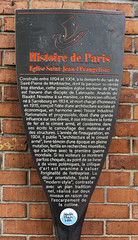
Église Saint-Jean-l'Évangéliste Construite entre 1894 et 1904 à la demande du curé de Saint-Pierre de Montmartre, dont la paroisse se révèle trop étendue, cette première église moderne de Paris est l’œuvre d'un disciple de Labrouste: Anatole de Baudot. Novateur à sa manière, ce théoricien officiel, né à Sarrebourg en 1834, et mort chargé d'honneurs en 1915, conçoit l’idée d'une architecture sociale et économique, en harmonie avec l'essor industriel. Rationaliste et progressiste, doué d'une grande influence sur ses élèves, il ose introduire la fonte de fer et le ciment armé, et condamne dans ses écrits le camouflage de matériaux et des structures. L’année de l'inauguration, en 1904, il publie "L'architecture et le ciment armé", livre-témoin d'une époque en pleine mutation, fertile en recherches nouvelles, qui s’achève avec la première guerre mondiale. Si les visiteurs se montrent parfois choqués, au point de se livrer à de vives polémiques, la critique d'art est unanime à saluer l’originalité de l’entreprise. Le décor orientaliste, traité en "modern-style", contraste avec un plan traditionnel, réalisé sur deux niveaux en raison de l'escarpement de la colline.
English translation: Église Saint-Jean-l'Évangéliste. Built between 1894 and 1904 at the request of the parish priest of Saint-Pierre de Montmartre, whose parish was too large, this first modern church in Paris is the work of a disciple of Labrouste: Anatole de Baudot. An innovator in his own way, this official theorist, born in Sarrebourg in 1834, and died with honours in 1915, conceived the idea of a social and economic architecture in harmony with industrial growth. Rationalist and progressive, with great influence on his pupils, he dared to introduce iron casting and reinforced cement, and condemned in his writings the camouflage of materials and structures. The year of the inauguration in 1904, he published "L'architecture et le ciment armé", a book-witness of a period in full mutation, fertile in new research, which ends with the First World War. If visitors are sometimes shocked, to the point of engaging in intense polemics, the art critic is unanimous in saluting the originality of the company. The orientalist decor, treated in "modern-style", contrasts with a traditional plan, realised on two levels due to the escarpment of the hill.
Église Saint-Jean-de-Montmartre, 19 Rue des Abbesses, Paris, France
Subjects
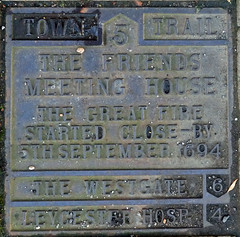
Warwick Town Trail #05
The Friends' Meeting House - The Great Fire started close by 5th September 1694 - < Westgate 6 - ^ Leycester Hospital 4
High Street, Warwick, United Kingdom
Subjects
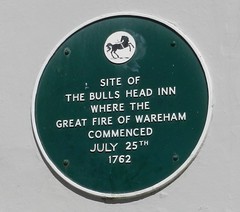
Site of The Bulls Head Inn where the Great Fire of Wareham commenced July 25th 1762
Lloyds TSB, South Street, Wareham, United Kingdom