
Gender Diversity
The top 10


_01_Crisco_edit.jpg?width=250)


98-108 Oak Street This row of 17th century houses with timber framed upper floors and flint rubble rear walls was heightened in the 18th century. No 98-100 were the residence of a wool merchant and the houses were occupied by families of weavers. Originally there would have been back gardens but in the 19th century these were built on with tenements and the houses fell into disrepair. Now restored to residential use they provide the model for the Trust's logo.
98-108 Oak Street, Norwich, United Kingdom
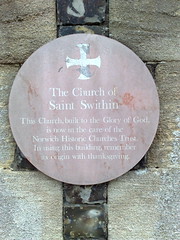
The Church of Saint Swithin This church, built to the Glory of God, is now in the care of the Norwich Historic Churches Trust. In using this building, remember its origin with thanksgiving.
St Benedicts Street, Norwich, United Kingdom
Subjects

The Strangers In 1565 the City authorities invited Protestant refugees from the Spanish Netherlands to settle in Norwich to boost the City's textile industry. 30 households of master weavers came over from Flanders, of which 24 were Flemish and 6 were French-speaking Walloons. Soon followed by many more, they became known as the Strangers, and at their peak accounted for over a third of the City's population.
Pottergate, Norwich, United Kingdom

Site of pre-conquest St Olave's Chapel demolished early 14th century
Albion Mill, King St. (opposite Southgate Lane), Norwich, United Kingdom
Subjects
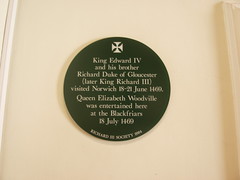
King Edward IV and his brother Richard Duke of Gloucester (later King Richard III) visited Norwich 18-21 June 1469. Queen Elizabeth Woodville was entertained here at the Blackfriars 18 July 1469
Blackfriars Hall, Norwich, United Kingdom
Subjects


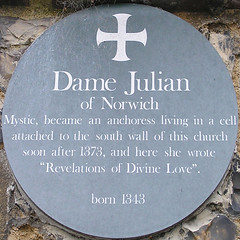
Dame Julian of Norwich Mystic, became an anchoress living in a cell attached to the south wall of this church soon after 1373, and here she wrote "Revelations of Divine Love". born 1343
St Julian's Church, Rouen Road, Norwich, United Kingdom
Subjects
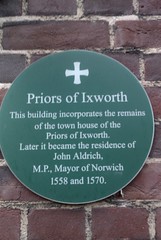
Priors of Ixworth This building incorporates the remains of the town house of the Priors of Ixworth. Later it became the residence of John Aldrich, M.P., Mayor of Norwich 1558 and 1570.
St Clement's House, St Clement's Alley, 21-16 Colegate, Norwich, United Kingdom
Subjects
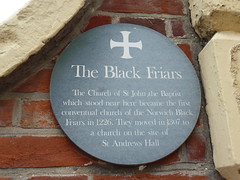
The Black Friars The Church of St John the Baptist, which stood near here became the first conventual church of the Norwich Black Friars in 1226. They moved in 1307 to a church on the site of St Andrews Hall.
Front wall of Octagon Chapel, Colegate, Norwich, United Kingdom
Subjects
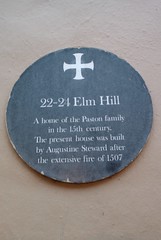
22-24 Elm Hill A home of the Paston family in the 15th century. The present house was built by Augustine Steward after the extensive fire of 1507
22-24 Elm Hill, Norwich, United Kingdom
Subjects

Baptist Particular Chapel Chapel for Particular Baptists Originally a warehouse it was converted into a chapel in 1833 and remained as such until 1975.
Timberhill, Norwich, United Kingdom
Site of Cooke's Hospital 1692-1892 founded by Thomas Cooke 1628-1703 Mayor of Norwich in 1689.
46 Rose Lane, Norwich, United Kingdom
Subjects

Site of the church St Peter at Southgate, founded before 1217 demolished c.1345
Southgate Lane, off King Street, Norwich, United Kingdom
Subjects
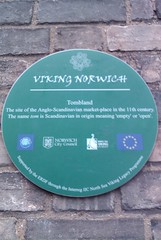
Tombland The site of the Anglo-Scandinavian market-place in the 11th century. The name tom is Scandinavian in origin meaning 'empty' or 'open'.
Tombland, Norwich, United Kingdom
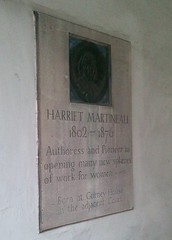
Harriet Martineau 1802-1876 Authoress and Pioneer in opening many new spheres of work for women Born at Gurney House in the adjacent Court
Gurney House, Norwich, United Kingdom
Subjects

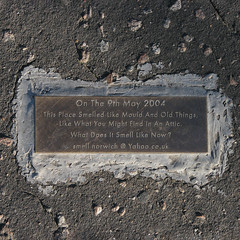
On The 9th May 2004 This Place Smelled Like Mould And Old Things, Like What You Might Find In An Attic. What Does It Smell Like Now? smell norwich @ Yahoo.co.uk
?, Norwich, United Kingdom
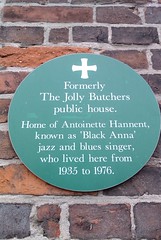
Formerly The Jolly Butchers public house Home of Antoinette Hannent, known as 'Black Anna' jazz and blues singer, who lived here from 1935 to 1976.
Ber Street, Norwich, United Kingdom
Subjects
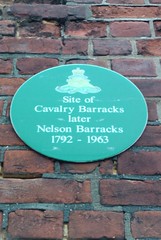
Site of Cavalry Barracks later Nelson Barracks 1792 - 1963
Corner of Barrack Street and Gurney Road, Norwich, United Kingdom
Subjects

The old Lobster Inn, on the north side of the road, registered in 1761 and closed in 1863, and the New Lobster, to the south, recorded from 1811. In the 1830s Lobster Lane included Bedford Street.
Lobster Lane, Norwich, United Kingdom
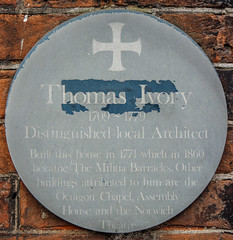
Thomas Ivory (1709-1779) distinguished local architect built St Helen's House in 1752 and lived here from 1756 until he died. Other buildings attributed to him include the Octagon Chapel and the Assembly House.
St Helen's House, Norwich, United Kingdom
Subjects

The Beatles performed at the Grosvenor Rooms on May 17th 1963, before queuing with fans for chips at Valori's on Rose Lane
Grosvenor House, 112-114 Prince of Wales Road, Norwich, United Kingdom
Subjects


Henry Bacon Worsted merchant, built this house. He became Sheriff of Norwich in 1548 Mayor in 1557 and 1566. The house had associations with Kett's Rebellion in 1549.
Bacon's House, 31 Colegate, Norwich, United Kingdom
Subjects
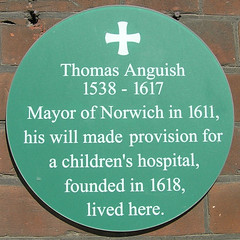
Thomas Anguish 1538-1617 Mayor of Norwich in 1611, his will made provision for a children's hospital, founded in 1618, lived here.
Maids Head Hotel, Wensum Street, Norwich, United Kingdom
Subjects
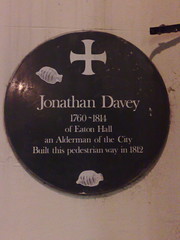
Jonathan Davey 1760-1814 of Eaton Hall an Alderman of the City built this pedestrian way in 1812
14 Davey Place, Norwich, United Kingdom
Subjects
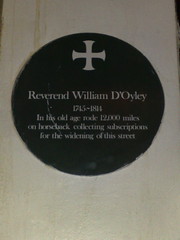
Reverend William D'Oyley 1745-1814 in his old age rode 12,000 miles on horseback collecting subscriptions for the widening of this street
Orford Place, Norwich, United Kingdom
Subjects

Helgate Court in medieval Norwich Westwick Street had its own gate through the city wall - HELGATE
Westwick Street, Norwich, United Kingdom

2-4 St Andrews Hill A 17th century building in what was once a medieval thoroughfare, converted to two residential units with a shop below. The street facade shows shows at least four different phases of brickwork and flint rubble, evidence of past alterations. There is a very fine oak weaver's window to the second floor.
2-4 St Andrews Hill, Norwich, United Kingdom

Louis Marchesi 1898-1968 Founder of the Round Table Movement and owner of Langford's Restaurant which stood on this site where Table No.1 meetings took place.
50 London Street, Norwich, United Kingdom
Subjects
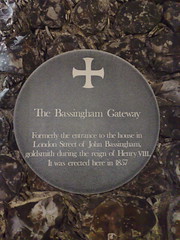
The Bassingham Gateway Formerly the entrance to the house in London Street of John Bassingham, goldsmith during the reign of Henry VIII. It was erected here in 1857
St Peters Street, Norwich, United Kingdom
Subjects
Site of a 13th century church known as St Cuthbert's which was demolished in 1530
Norwich, Norwich, United Kingdom
Subjects
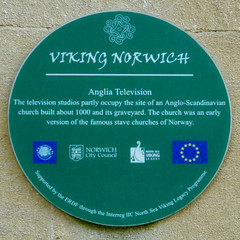
Anglia Television The television studios partly occupy the site of an Anglo-Scandinavian church built about 1000 and its graveyard. The church was an early version of the famous stave churches of Norway.
Agricultural Hall Plain, Norwich, United Kingdom
Subjects

Here stood St Crowche's Church built before 1272 desecrated and demolished 1551
36 Exchange Street, Norwich, United Kingdom
Subjects
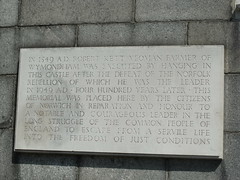
In 1549 AD Robert Kett yeoman farmer of Wymondham was executed by hanging in this castle after the defeat of the Norfolk Rebellion of which he was the leader In 1949 AD - four hundred years later - this memorial was placed here by the citizens of Norwich in reparation and honour to a notable and courageous leader in the long struggle of the common people of England to escape from a servile life into the freedom of just conditions
Norwich Castle, Norwich, United Kingdom
Subjects

The Church of Saint James This Church, built to the Glory of God, is now in the care of the Norwich Historic Churches Trust. In using this building, remember its origin with thanksgiving.
Barrack Street, Norwich, United Kingdom
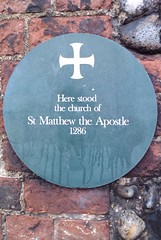
Here stood the church of St Matthew the Apostle 1286
St Martin at Palace Plain, Norwich, United Kingdom
Subjects
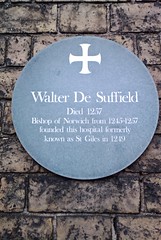
Walter De Suffield Died 1257 Bishop of Norwich from 1245-1257 founded this hospital formerly known as St Giles in 1249
Bishop Gate, Norwich, United Kingdom
Subjects
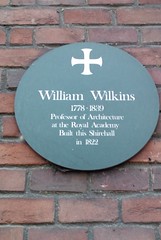
William Wilkins 1778-1839 Professor of Architecture at the Royal Academy Built this Shirehall in 1822
Market Avenue, Norwich, United Kingdom
Subjects
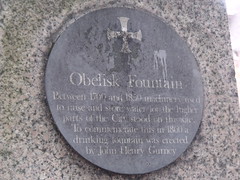
Obelisk Fountain Between 1700 and 1850 machinery used to raise and store water for the higher parts of the City stood on this site. To commemorate this in 1860 a drinking fountain was erected by John Henry Gurney
Tombland, Norwich, United Kingdom
Subjects


Site of the Saxon church of St Michael at Tombland demolished c.1100
Norwich, Norwich, United Kingdom

Colegate The street-name may derive from a Scandinavian personal name Coli with the Old Norse word gata meaning street.
Colegate, Norwich, United Kingdom

The Church of Saint Clement This Church, built to the Glory of God, is now in the care of the Norwich Historic Churches Trust. In using this building, remember its origin with thanksgiving.
Norwich, Norwich, United Kingdom
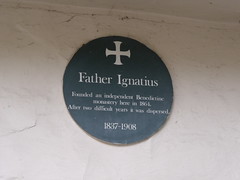
Father Ignatius Founded an independent Benedictine monastery here in 1864. After two difficult years it was dispersed 1837-1908
Elm Hill, Norwich, United Kingdom
Subjects

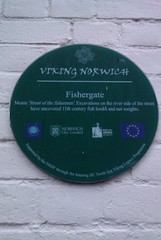
Fishergate Means 'Street of the fisherman'. Excavations on the river side of the street have uncovered 11th century fish hooks and net weights.
3 Fishergate, Norwich, United Kingdom
Subjects
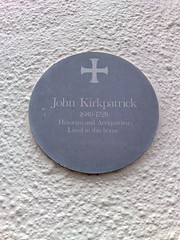
John Kirkpatrick 1686-1728 Historian and Antiquarian Lived in this house
St Andrews Street, Norwich, United Kingdom
Subjects

Plains of Norwich The Dutch and Flemish who came to Norwich in the 16th century left their mark on the Norwich landscape and local language. From the Dutch 'plein', the Norwich 'plains' define the squares and open spaces of land, in the midst of the narrow maze of streets. Maddermarket Plain, St Giles' Plain, St Benedict's Plain, St Margaret's Plain and St Andrew's Hall Plain can be found in the Norwich Lanes area.
Expresso, St George's Street, Norwich, United Kingdom
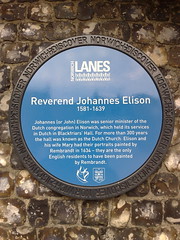
Reverend Johannes Elison 1581-1639 Johannes (or John) Elison was senior minister of the Dutch congregation in Norwich, which held its services in Dutch in Blackfriars' Hall. For more than 300 years the hall was known as the Dutch Church. Elison and his wife Mary had their portraits painted by Rembrandt in 1634 - they are the only English residents to have been painted by Rembrandt.
Princes Street, Norwich, United Kingdom
Subjects
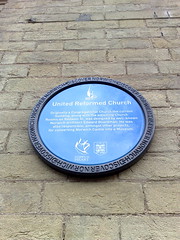
United Reformed Church Originally a Congregational Church the current building, along with the adjoining Church rooms on Redwell St, was designed by well-known Norwich architect Edward Boardman. He was also responsible, amongst other projects, for converting Norwich Castle into a Museum.
Princes Street, Norwich, United Kingdom
Subjects
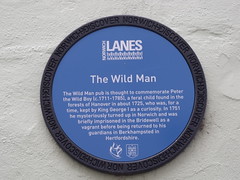
The Wild Man pub is thought to commemorate Peter the Wild Boy (c.1711-1785), a feral child who was, for a time, kept by King George I as a curiosity. In 1751 he mysteriously turned up in Norwich and was briefly imprisoned in the Bridewell as a vagrant before being returned to his guardians in Berkhampstead in Hertfordshire.
Bedford Street, Norwich, United Kingdom
Subjects

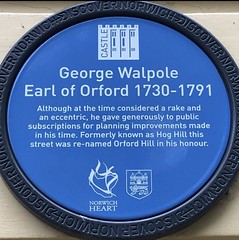
George Walpole Earl of Orford 1730-1791 Although at the time considered a rake and an eccentric, he gave generously to public subscriptions for planning improvements made in his time. Formerly known as Hog Hill this street was re-named Orford Hill in his honour.
Orford Hill, Norwich, United Kingdom
Subjects
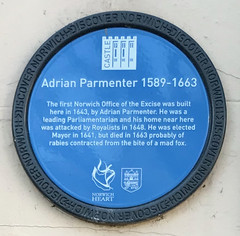
Adrian Parmenter 1589-1663 The first Norwich Office of the Excise was built here in 1643, by Adrian Parmenter. He was a leading Parliamentarian and his home near here was attacked by Royalists in 1648. He was elected Mayor in 1641, but died in 1663 probably of rabies contracted from the bite of a mad fox.
Timberhill, Norwich, United Kingdom
Subjects
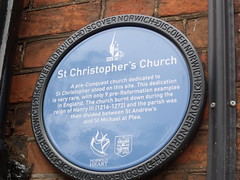
St Christopher's Church A pre-Conquest church dedicated to St Christopher stood on this site. This dedication is very rare, with only 9 pre-Reformation examples in England. The church burnt down during the reign of Henry III (1216-1272) and the parish was then divided between St Andrew's and St Michael at Plea.
Princes Street, Norwich, United Kingdom
Subjects
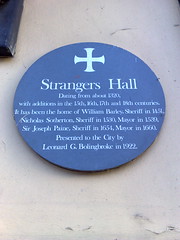
Strangers Hall Dating from about 1320, with additions in the 15th, 16th, 17th and 18th centuries. It has been the home of William Barley, Sheriff in 1451, Nicholas Sotherton, Sheriff in 1530, Mayor in 1539, Sir Joseph Paine, Sheriff in 1654, Mayor in 1660. Presented to the City by Leonard G. Bolingbroke in 1922.
Strangers Hall, Charing Cross, Norwich, United Kingdom
Subjects
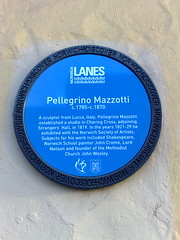
Pellegrino Mazzotti c.1785-c.1870 A sculptor from Lucca, Italy, Pellegrino Mazzotti established a studio in Charing Cross, adjoining Strangers' Hall, in 1819. In the years 1821-29 he exhibited with the Norwich Society of Artists. Subjects for his work included Shakespeare, Norwich School painter John Crome, Lord Nelson and founder of the Methodist Church John Wesley.
Charing Cross, Norwich, United Kingdom
Subjects
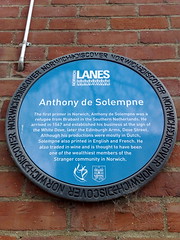
Anthony de Solempne The first printer in Norwich, Anthony de Solempne was a refugee from Brabant in the Southern Netherlands. He arrived in 1567 and established his business at the sign of the White Dove, later the Edinburgh Arms, Dove Street. Although his productions were mostly in Dutch, Solempne also printed in English and French. He also traded in wine and is thought to have been one of the wealthiest members of the Stranger community in Norwich
Dove Street, Norwich, United Kingdom
Subjects
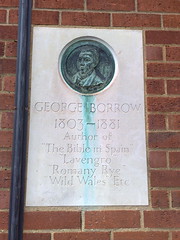
George Borrow 1803-1881 Author of "The Bible in Spain" "Lavengro" "Romany Rye" "Wild Wales" etc
Willow Lane, Norwich, United Kingdom
Subjects

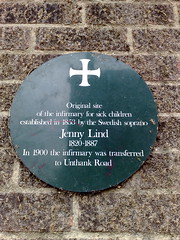
Original site of the infirmary for sick children established in 1853 by the Swedish soprano Jenny Lind 1820-1887 In 1900 the infirmary was transferred to Unthank Road
Pottergate, Norwich, United Kingdom
Subjects

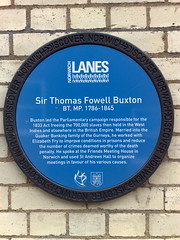
Sir Thomas Fowell Buxton BT. MP. 1786-1845 Buxton led the Parliamentary campaign responsible for the 1833 Act freeing the 700,000 slaves then held in the West Indies and elsewhere in the British Empire. Married into the Quaker Banking family of the Gurneys, he worked with Elizabeth Fry to improve conditions in prisons and reduce the number of crimes deemed worthy of the death penalty. He spoke at the Friends Meeting House in Norwich and used St Andrews Hall to organize meetings in favour of his various causes.
Upper Goat Lane, Norwich, United Kingdom
Subjects

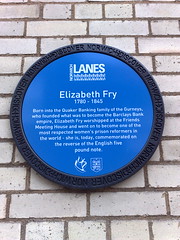
Elizabeth Fry 1780-1845 Born into the Quaker Banking family of the Gurneys, who founded what was to become the Barclays Bank empire, Elizabeth Fry worshipped at the Friends Meeting House and went on to become one of the most respected women's prison reformers in the world - she is, today, commemorated on the reverse of the English five pound note
Upper Goat Lane, Norwich, United Kingdom
Subjects
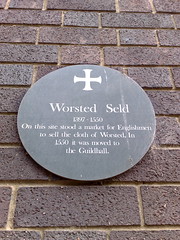
Worsted Seld 1397-1550 On this site stood a market for Englishmen to sell the cloth of Worsted. In 1550 it was moved to the Guildhall.
Pottergate, Norwich, United Kingdom
Subjects
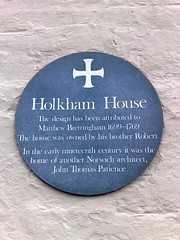
Holkham House. The design has been attributed to Matthew Brettingham 1699-1769. The house was owned by his brother Robert. In the early nineteenth century it was the home of another Norwich Architect, John Thomas Patience
Cow Hill, Norwich, United Kingdom
Subjects
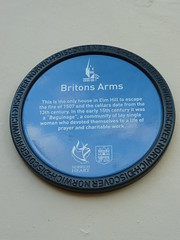
Britons Arms This is the only house in Elm Hill to escape the fire of 1507 and the cellars date from the 13th century. In the early 15th century it was a "Beguinage", a community of lay single women who devoted themselves to a life of prayer and charitable work.
Britons Arms, 9 Elm Hill, Norwich, United Kingdom
Subjects
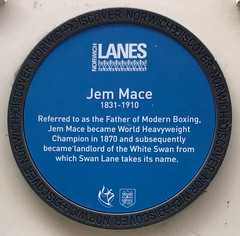
Jem Mace 1831-1910 Referred to as the Father of Modern Boxing, Jem Mace became World Heavyweight Champion in 1870 and subsequently became landlord of the White Swan from which Swan Lane takes its name.
Swan Lane, Norwich, United Kingdom
Subjects


Sarah Glover 1786-1867 Originator of the Tonic sol-fa notation lived in this house
Pottergate, Norwich, United Kingdom
Subjects
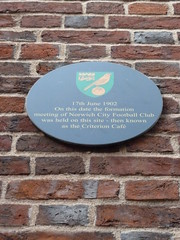
17th June 1902 On this date the formation meeting of Norwich City Football Club was held on this site - then known as the Criterion Cafe
Red Lion Street, Norwich, United Kingdom
Subjects
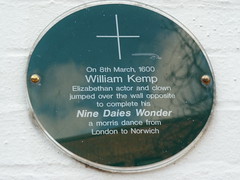
On 8th March, 1600 William Kemp Elizabethan actor and clown jumped over the wall opposite to complete his Nine Daies Wonder a morris dance from London to Norwich
Maddermarket Theatre, St Johns Alley, Norwich, United Kingdom
Subjects

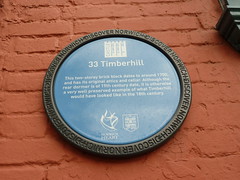
33 Timberhill This two-storey brick block dates to around 1700, and has its original attics and cellar. Although the rear dormer is of 19th century date, it is otherwise a very well preserved example of what Timberhill would have looked like in the 18th century.
33 Timberhill, Norwich, United Kingdom
Subjects
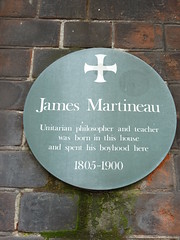
James Martineau Unitarian philosopher and teacher was born in this house and spent his boyhood here 1805-1900
24 Magdalen Street, Norwich, United Kingdom
Subjects

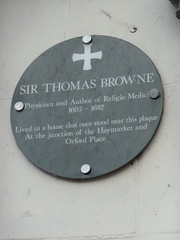
Sir Thomas Browne Physician and Author of Religio Medici 1605-1682 Lived in a house that once stood near this plaque At the junction of the Haymarket and Orford Place
1 Orford Place, Norwich, United Kingdom
Subjects

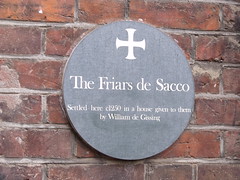
The Friars de Sacco Settled here c1250 in a house given to them by William de Gissing
Elm Hill, Norwich, United Kingdom
Subjects
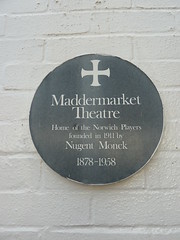
Maddermarket Theatre Home of the Norwich Players founded in 1911 by Nugent Monck 1878-1958
Maddermarket Theatre, St John Madder Market, Norwich, United Kingdom
Subjects
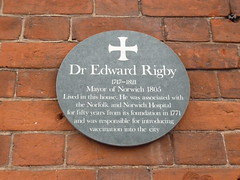
Dr Edward Rigby 1747-1821 Mayor of Norwich 1805 Lived in this house. He was associated with the Norfolk and Norwich Hospital for fifty years from its foundation in 1771 and was responsible for introducing vaccination into the city
St Giles Street, Norwich, United Kingdom
Subjects

Norwich School Medieval School recorded 1240 Established as a royal foundation in 1547 by King Edward VI Moved to this building in 1553 from temporary accommodation at the dissolved Convent of the Black Friars, St Andrews
The Close, Norwich Cathedral, Norwich, United Kingdom
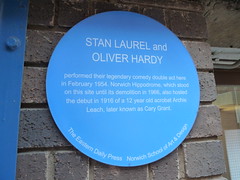
Stan Laurel and Oliver Hardy performed their legendary comedy double act here in February 1954. Norwich Hippodrome, which stood on this site until its demolition in 1966, also hosted the debut in 1916 of a 12 year old acrobat Archie Leach, later known as Cary Grant.
Entrance to St Giles Street car park, Norwich, United Kingdom
Subjects

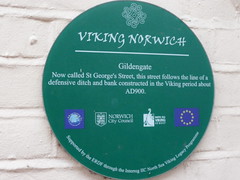
Gildengate Now called St George's Street, this street follows the line of a defensive ditch and bank constructed in the Viking period about AD900.
St George's Street, Norwich, United Kingdom

Steam Packet House Site of the Steam Packet Public House. In the 19th Century, King Street had 2 breweries & 26 pubs, including 3 Steam Packets, a Ship, an Old Barge and a Keel & Wherry.
King Street, Norwich, United Kingdom
The entrance to the 13th century church of St Mary the Less, which became a draper's hall in 1564, later used for worship by the Huguenot (French Protestant) congregation, 1637-1832.
Queens Street, Norwich, United Kingdom
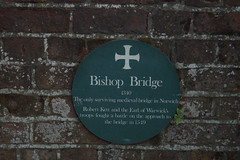
Bishop Bridge 1340 The only surviving medieval bridge in Norwich. Robert Kett and the Earl of Warwick's troops fought a battle on the approach to the bridge in 1549.
Low wall on side of bridge facing Riverside Road, Norwich, United Kingdom
Subjects
.jpg?width=250)
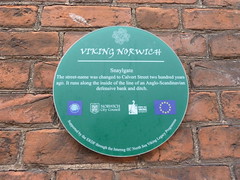
Snaylgate The street-name was changed to Calvert Street two hundred years ago. It runs along the inside of the line of an Anglo-Scandinavian defensive bank and ditch.
Calvert Street, Norwich, United Kingdom
Subjects
St Clement Colegate St Clement is the patron saint of sailors and was a popular dedication for churches in Scandinavia. Churches dedicated to St Clement in Anglo-Scandinavian towns tend to be on main streets, often next to river crossings.
Colegate, Norwich, United Kingdom
John Greene Crosse, MD, FRCS, FRS 1791-1850 Celebrated Surgeon of the Norfolk and Norwich Hospital lived here.
9-10 Orford Hill, Norwich, United Kingdom
Subjects


John Caius Scholar and Physician to Edward VI and Mary was born in this parish. In 1557 he refounded Gonville Hall, Cambridge 1510-1573.
168 King Street, Norwich, United Kingdom
Subjects

Colman School Opened 16 January 1906 The school clock was restored by the Parent Teacher Association to mark the Silver Jubilee of Queen Elizabeth II 1952 EIIR 1977
Colman Infant School, Colman Road, Norwich, United Kingdom

Remains of St BENEDICTS CHURCH destroyed by enemy air raids 1942
St Benedicts Street, Norwich, United Kingdom

Site of the 12th century church of St Mary In The Marsh Demolished in 1775
Cathedral Close, Norwich, United Kingdom
Subjects

Site of St Olaf's Church St Olaf's (or Olave's) was demolished in 1546. Olaf was king of Norway and was martyred in 1030. He rapidly became popular in those parts of England settled by Scandinavians.
St Crispins Road/Botolph Street corner of Surrey Chapel free church, Norwich, United Kingdom
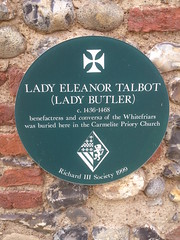
Lady Eleanor Talbot (Lady Butler) c. 1436-1468 benefactress and conversa of the Whitefriars was buried here in the Carmelite Priory Church.
Whitefriars, Norwich, United Kingdom
Subjects
Millennium Building Archaeological excavation here discovered a rare Viking gold ingot as well as part of a crucible with gold residues implying that gold-working was taking place.
Millennium Building, Norwich, United Kingdom

31-37 Church Lane, Eaton A late 17th century house with a typical Norfolk plan, originally one building but divided into two in the lat 18th century. The house next to the parish church looked over the water meadows to the river Yare. The outbuildings were a later date. probably 19th century.
31-33 Church Lane, Eaton, Norwich, United Kingdom

St Edmund The church is dedicated to the royal martyr, King Edmund of the East Angles. He was killed by the Danes in 869
St Edmund Church, Norwich, United Kingdom

80-82 St Georges Street An early 16th century building with a flint rubble ground floor and timber-framed first floor. Situated at the rear of the building was the rare feature of a stair turret but this had to be removed as it was unsafe, The nearby Alms Lane site was redeveloped in 1985. It is thought that almshouses stood on this site from the 14th century.
80-82 St Georges Street, Norwich, United Kingdom

1-9 Muspole Street These 17th century houses in the heart of what was once the shoe industry in Norwich and behind the church of St. George's Colegate were first restored in the 1880s. Saved from demolition in 1969 for the extension of a car park at nearby Alms Lane they were converted to flats. Note the five large dormer windows, known as "luccams" or "lucarnes", a feature typical of the Norwich Street scene.
1-9 Muspole Street, Norwich, United Kingdom
Paper Mill Yard lies just outside the medieval city limits. These were defined by the City Walls which formed a 2 1/2 mile (4km) defensive barrier around the city. They included 12 gates, one of which, Conesford Gate, stood here until 1794, guarding entry into Norwich via King Street. All of the medieval gates were removed around this time because they were considered too expensive to maintain.
?, Norwich, United Kingdom
Subjects

Stonemasons Court 53-57 St Augustines Street Within the courtyard is a 16th century brick and flint house with stone dressing to door and windows. I the late 18th century an extra floor was added and the front altered with sash windows and a grand pedimented front doorcase. I the 20th century a stonemason occupied the site. The Trust restored the 16th century roof line and returned the buildings to residential use.
Stonemasons Court, 53-57 St Augustines Street , Norwich, United Kingdom
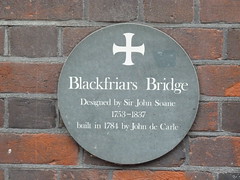
Blackfriars Bridge Designed by Sir John Soane 1753-1837 built in 1784 by John de Carle.
Adjacent to bridge by the Norwich Art School, St Georges Street, Norwich, United Kingdom
Subjects

Churchman House Built by Alderman Thomas Churchman and later the home of Sir Thomas Churchman. Mayor in 1761. Sir William Foster, Sheriff in 1835 and Mayor in 1844. Its most distinguished resident was Sir Peter Eade, Mayor in 1883 and 1893 and 1895, physician, historian of St Giles Church and Parish and Freeman of the City.
Churchman House, 68 Bethel Street, Norwich, United Kingdom
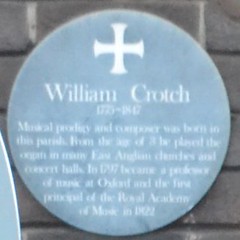
William Crotch 1775-1847 Musical prodigy and composer was born in this parish. From the age of 3 he played the organ in many East Anglian Churches and concert halls. In 1797 became a professor of music at Oxford and the first principal of the Royal Academy of Music in 1822.
St Crispins Road/Botolph Street corner of Surrey Chapel free church, Norwich, United Kingdom
Subjects

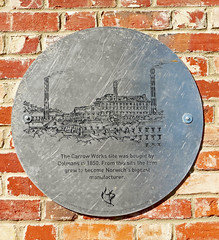
The Carrow Works site was bought by Colmans in 1850. From this site the firm grew to become Norwich's biggest manufacturer.
near Carrow Road, Norwich, United Kingdom

Carrow Bridge was built in 1810. It linked Carrow Hill directly with the north-eastern end of Carrow Road. The bridge remained in use until the new bridge was opened to the west in 1923.
Carrow Bridge, Norwich, United Kingdom
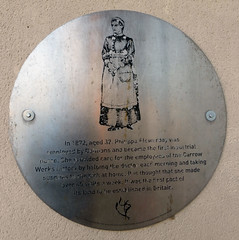
In 1872, aged 32, Philippa Flowerday was employed by Colmans and became the first industrial nurse. She provided care for the employees of the Carrow Works factory by helping the doctor each morning and taking supplies to the sick at home. It is thought that she made over 45 visits a week. It was the first post of its kind to be established in Britain.
?, Norwich, United Kingdom

City Wall The band of flints nearby marks the course of the fourteenth century City Wall. It includes the site of a tower subsequently incorporated in the nineteenth century Drill Hall used by the Volunteer and Territorial Units of Norwich until 1950 and demolished in 1964.
On wall adjoining 1-6 Cleveland Road, Norwich, United Kingdom
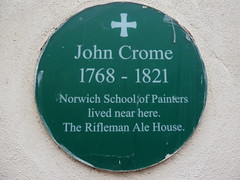
John Crome, 1768-1821 Norwich School of Painters lived near here. The Rifleman Ale House.
On building formerly called Little Portion Mission House, Cross Lane, Norwich, United Kingdom
Subjects

Elizabeth Bentley 1767-1839, Authoress of "Tales for Children in Verse" lived in this house.
45 St Stephen's Square, Norwich, United Kingdom
Subjects

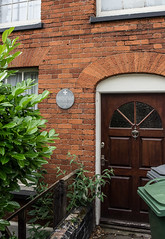
Here lived Edmund Cotman. 1759-1844. Haberdasher and Freeman of Norwich 1785. Father of the artist John Sell Cotman 1782-1842. The river view from this house was the subject of the artists last painting in 1842.
18 Yarmouth Road, Norwich, United Kingdom
Subjects
St Margaret at Newbridge Church Near here stood the church of St Margaret at New Bridge which ceased to be a parish church at the time of the Black Death in 1349, and was later used as an anchorhold where John Martin anchorite lived in 1429.
The Gun Wharf, 42-58 St Georges Street, Norwich, United Kingdom
Subjects
Site of a Cucking Stool. From 1562-1597 strumpets and common scolds were sentenced to public punishment of ducking in the river.
east side of Fye Bridge, Norwich, United Kingdom
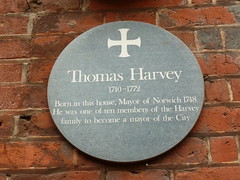
Thomas Harvey 1710-1772 Born in this house, Mayor of Norwich 1748. He was one of ten members of the Harvey family to become a mayor of the City.
Rear of 18 Colegate, Norwich, United Kingdom
Subjects
Howard House The residence of Henry Howard who became the sixth Duke of Norfolk in 1677. 1628-1684.
97 King Street, Norwich, United Kingdom
Subjects

Jem Mace 1831-1910 World Champion Pugilist Landlord of the Swan Tavern which stood near here
8 Swan Lane, Norwich, United Kingdom
Subjects

Henry Ninham 1793-1874 Artist, engraver and heraldic painter lived in this house.
10 Chapelfield North, Norwich, United Kingdom
The Duke of Norfolk's Palace One of the largest town houses in England stood near this site 1561-1711.
St Andrews car park (car park now demolished), Norwich, United Kingdom
Subjects

Horse Fair The site of the Horse Fairs during the reign of King Edward I 1272-1307 and King Edward II 1307-1327. It was moved to the Castle ditches by order of King Henry VII in 1500.
Between the doorways of 1A and 2A Blickling Court, St Faiths Lane, Norwich, United Kingdom
Subjects

Music House The oldest dwelling house in Norwich. Home of the Jurnet family C1170-1210, Sir John Paston after 1478 and Lord Chief Justice Coke from 1613.
Music House, 167 King Street, Norwich, United Kingdom
Subjects

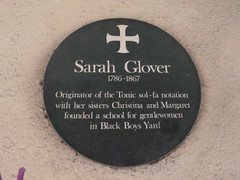
Sarah Glover 1786-1867 Originator of the Tonic sol-fa notation, with her sisters Christina and Margaret founded a school for gentlewomen in Black Boys Yard.
The Merchants of Colegate public house, Colegate, Norwich, United Kingdom
Subjects
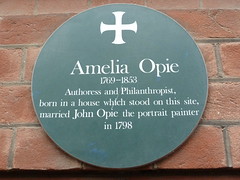
Amelia Opie 1769-1853 Authoress and Philanthropist born in a house which stood on this site, married John Opie the portrait painter in 1798.
Between St Georges and Water Lane, Colegate, Norwich, United Kingdom
Subjects
Adrian Parmenter 1589-1663 Elected Mayor for 1641. He opened the first Norwich office of the Excise in 1643 which stood on this site.
Owen's Restaurant, 1 Farmers Avenue, Norwich, United Kingdom
Subjects

St Andrew's Hall The nave of the conventual church of the Blackfriars was built at the expense of Sir Thomas Erpingham 1357-1428 Warrior of Agincourt.
St Georges Street, Norwich, United Kingdom
St Christopher's Church On this site stood the pre-Conquest church of St Christopher destroyed by fire in the late 13th century.
5 Princes Street, Norwich, United Kingdom
Subjects
St John the Evangelist Church Near this site stood the church of St John the Evangelist, demolished c. 1300.
St John's House, 2-4 Rose Lane/King Street, Norwich, United Kingdom
Subjects

Site of the Conventual Church of the Grey Friars dedicated to St Francis 1292- 1539
44 Prince of Wales Road, Norwich, United Kingdom
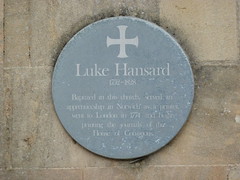
Luke Hansard 1752-1828 Baptized in this church, served an apprenticeship in Norwich as a printer went to London in 1774 and began printing the journals of the House of Commons.
St Mary Coslany Church doorway, St Mary's Plain, Norwich, United Kingdom
Subjects
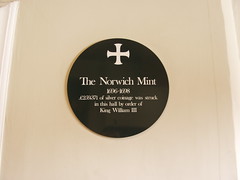
The Norwich Mint 1696-1698 £259,371 of silver coinage was struck in this hall by order of King William III.
Inside St Andrews Hall, Norwich, United Kingdom
Subjects
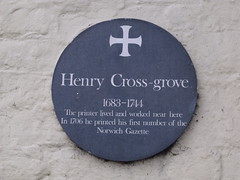
Henry Cross-grove 1683-1744 The printer lived and worked near here. In 1706 he printed his first number of the Norwich Gazette.
Three Tuns public house, Earlham Road, Norwich, United Kingdom
Subjects

Sydney Long 1870-1939 Physician, pioneer of nature conservation. Founder of the Norfolk Naturalists Trust and secretary of the Norfolk and Norwich Naturalist Society for 24 years lived in this house.
31 Surrey Street, Norwich, United Kingdom

Lollard's Pit The site of a place of execution for heretics and other offenders in the sixteenth century
On front of the Bridge House public house, Riverside Road, Norwich, United Kingdom
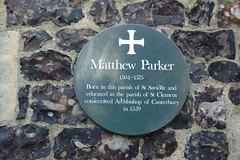
Matthew Parker 1504-1575 Born in this parish of St Saviour and educated in the parish of St Clement, consecrated Archbishop of Canterbury in 1559.
St Saviours Church, Magdalen Street, Norwich, United Kingdom
Subjects


St Mary's Baptist Church Has met on this site since 1745. From 1689 the church worshipped in the East Granary of the Blackfriars Convent and prior to this in private houses.
St Mary's Baptist Church, St Mary's Plain, Norwich, United Kingdom
Sir James Edward Smith. Botanist and founder of the Linnean Society was born in this house 1759-1828.
West side of Sir Garnet Wolseley public house, near steps to Provision Market, Norwich, United Kingdom
Anthony de Solempne Opened the first printing office in the City in 1567, at the sign of the White Dove later known as the Edinburgh Arms which collapsed after the great fire in 1898.
Pottergate/Dove Street opposite St John Maddermarket Church, Norwich, United Kingdom
Subjects
Synagogue Street Derived its name from a Synagogue built on this site in 1848, and was destroyed by enemy action 1942. It was the only street so named in this country.
Mountergate, on wall of former Norwich Brewery, Norwich, United Kingdom
George Walpole Earl of Orford 1730-1791 Gave generously to public subscription for planning improvements made in his time. This place, formerly known as Hog Hill, was renamed Orford Hill in his honour.
8 Orford Hill, Norwich, United Kingdom
Subjects

Walsingham Priors On this site stood the town house of the Augustinian Priory of our Lady of Walsingham conveyed to John the Prior in 1298.
Woolpack Inn, Colegate, Norwich, United Kingdom
Whitefriars The site of a priory of the White Friars or Carmelites founded c. 1256.
Jarrolds & Sons Ltd., Whitefriars Street, Norwich, United Kingdom
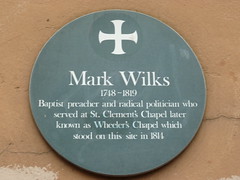
Mark Wilks 1748-1819 Baptist preacher and radical politician who served at St Clement's Chapel later known as Wheeler's Chapel which stood on this site.
Wooden fronted car park garage, Colegate, Friars Quay, Norwich, United Kingdom
Subjects
Sir Benjamin Wrench BA, MA, MD 1665-1747 Eminent Physician of this City for 56 years lived in a house which stood on this site.
Corner of Bedford Street and Exchange Street. Jarrold & Sons Ltd, Norwich, United Kingdom
Subjects
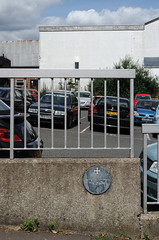
Here stood the pre-Conquest church of St Michael at Thorn. Destroyed by enemy action 27th June 1942.
Thorn Lane/Ber Street. Low on wall of the EDP car park., Norwich, United Kingdom
Subjects

Sir J E Smith 1759-1828 The natural historian lived here. He was the founder and first President of both the Linnean Society of London in 1788 and the Norwich Museum in 1825.
29 Surrey Street, Norwich, United Kingdom

John Sell Cotman 1782-1842 One of the most famous of the Norwich School of Painters Lived in this house
St Martin at Palace Plain, Norwich, United Kingdom
Subjects

20 Westlegate formerly the "Barking Dickie Inn". This is Norfolk dialect for the "Singing Donkey" and derives from a badly painted sign of the Light Horseman.
20 Westlegate, Norwich, United Kingdom
Late 13th century church of St Michael Early 14th century to mid 16th century monastery of the Austin Friars incorporating the above church This stone arch was found in masonry thought to be an old tomb, during excavations on this site in 1948 and re-erected in 1970
King Street, Norwich, United Kingdom
On this site stood an Austin Friary built between 1360 and 1368 and dissolved in 1538. It was later demolished and extensive remains were uncovered in 1970 during the construction of this building A plan of the friary is preserved in the Norwich Castle Museum
King Street, Norwich, United Kingdom

In this 15 century house "Pilgrims Hall" & latterly "Old Rosemary Tavern" lived Thomas Pykerell Mercer thrice mayor of Norwich 1525, 1533 & 1538
St Marys Plain, Norwich, United Kingdom
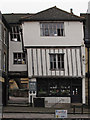
This house purchased and preserved in 1924 by the Norfolk Archaeological Trust was built by Augustine Steward, Mercer, Sheriff 1526, Mayor 1534, 1546 and 1556. Burgess in Parliament 1547. [full inscription unknown]
?, Norwich, United Kingdom
Subjects

Here lived Joseph Kinghorn Scholar and Divine Minister of St Mary's Baptist Church 1789-1832
104 Pottergate, Norwich, United Kingdom

Remains of Anchorite House belonging to Whitefriars Monastery founded by Philip de Cowgate AD 1256
near St James Mill, Whitefriars, Norwich, United Kingdom

Early in the 19th Century, a Sedan Chair stood for hire at this spot, which was then Devil's Alley, with steps leading from Castle Meadow to London Street
6 Opie Street, Norwich, United Kingdom

The Arms of William Appleyard first Mayor of Norwich 1403-4 to 1405 who lived and served his mayoralty in the adjacent house, built in the latter part of the XIV Century and esteemed the finest piece of flintwork in England
?, Norwich, United Kingdom

The Church of Saint Martin at Palace This Church, built to the Glory of God, is now in the care of the Norwich Historic Churches Trust. In using this building, remember it's origin with thanksgiving.
St Martin at Palace Plain, Norwich, United Kingdom
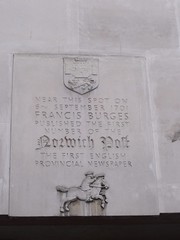
Near this spot on 6th September 1701 Francis Burges published the first number of the Norwich Post the first English Provincial Newspaper
Redwell Street, Norwich, United Kingdom
Subjects

Remains of the Monastic Infirmary AD 1175-1200 Repaired AD 1896
near a car park at Norwich Cathedral, Norwich, United Kingdom

This gateway was restored in 1955 in memory of John Henry Guy a friend of Norwich and a Director of the Mackintosh & Caley Companies
Erpingham Gateway - Tombland, Norwich, United Kingdom
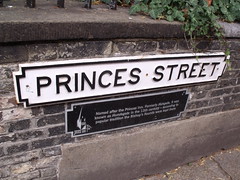
Princes Street Named after the Princes Inn. Formerly Hungate, it was known as Hundergate in the 13th century - according to popular tradition the Bishop's hounds were kept there
Princes Street, Norwich, United Kingdom
Subjects
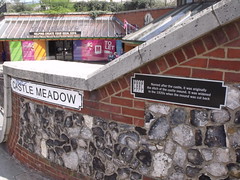
Castle Meadow Named after the castle, it was originally the ditch of the castle mound. It was widened in the 1920s when the mound was cut back
Castle Meadow (near the Castle Mall), Norwich, United Kingdom
Subjects
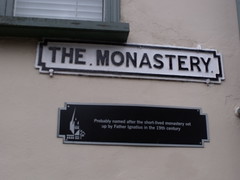
The Monastery Probably named after the short-lived monastery set up by Father Ignatius in the 19th century
The Monastery, Norwich, United Kingdom
Subjects
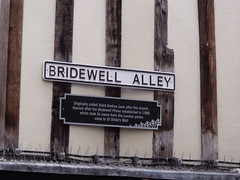
Bridewell Alley Originally called Seint Andreu Lane after the church. Named after the Bridewell Prison established in 1585 which took its name from the London prison close to St. Bride's Well
Bridewell Alley, Norwich, United Kingdom
Subjects
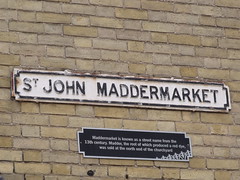
St John Maddermarket Maddermarket is known as a street name from the 13th century. Madder, the root of which produced a red dye, was sold at the north end of the churchyard
St John Maddermarket, Norwich, United Kingdom
Subjects
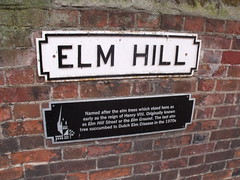
Elm Hill Named after the elm trees which stood here as early as the reign of Henry VIII. Originally known as Elm Hill Street or the Elm Ground. The last elm tree succumbed to Dutch Elm Disease in the 1970s
Elm Hill, Norwich, United Kingdom
Subjects
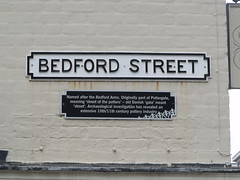
Bedford Street Named after the Bedford Arms. Originally part of Pottergate, meaning 'street of the potters' - old Danish 'gata' meant 'street'. Archaeological investigation has revealed an extensive 10th/11th century pottery industry
Bedford Street, Norwich, United Kingdom
Subjects
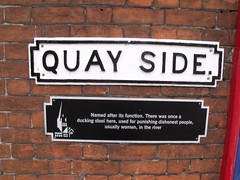
Quay Side Named after it's function. There was once a ducking stool here, used for punishing dishonest people, usually women, in the river
Quay Side, Norwich, United Kingdom
Subjects

Francis Blomefield 1705-1751 The eminent local historian lived here.
13 Willow Lane, Norwich, United Kingdom
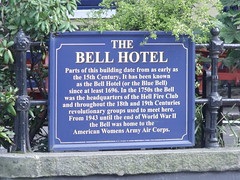
The Bell Hotel Parts of this building date from as early as the 15th Century. It has been known as the Bell Hotel (or the Blue Bell) since at least 1696. In the 1750s the Bell was the headquarters of the Hell Fire Club and throughout the 18th and 19th Centuries revolutionary groups used to meet here. From 1943 until the end of World War II the Bell was home to the American Womens Army Air Corps.
The Bell Hotel - Red Lion Street, Norwich, United Kingdom
Subjects

Dukes Palace Bridge which spanned the River Wensum from 1822 to 1972. The cast iron arch was saved by the Norwich Society and presented to Castle Mall. It was restored and re-erected in 1992
Entrance to The Mall car park, Norwich, United Kingdom
Subjects

Britannia Barracks 1887-1959 Headquarters of the Royal Norfolk Regiment. Queen Anne awarded the figure of Britannia as the regimental badge for outstanding gallantry at the Battle of Almanza 25th April 1707.
Entrance to Norwich Prison, Britannia Road, Norwich, United Kingdom
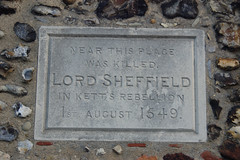
Near this place was killed Lord Sheffield in Kett's Rebellion 1st August 1549
Bishopgate, Norwich, United Kingdom
Subjects

Coslany, 'Coslany' may mean 'island with reeds'. In the 13th century this bridge consisted of two bridges which ran onto an island in the middle of the river. It may well have been a crossing point in Viking times.
Coslany Street, Norwich, United Kingdom
Subjects

This roundel marks the boundary of the Castle Fee, an area of the city directly controlled by the Crown until 1345.
Back of the Inns, Norwich, United Kingdom
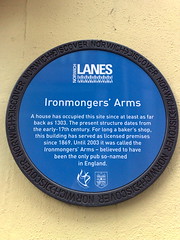
Ironmongers' Arms A house has occupied this site since at least as far back as 1303. The present structure dates from the early-17th century. For long a baker's shop, this building has served as licensed premises since 1869. Until 2003 it was called the Ironmongers' Arms - believed to have been the only pub so-named in England.
Pottergate, Norwich, United Kingdom
Subjects
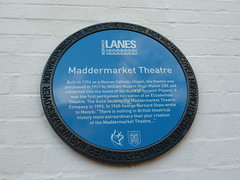
Maddermarket Theatre Built in 1794 as a Roman Catholic chapel, the theatre was purchased in 1921 by William Nugent Blight Monck CBE and converted into the home of the Guild of Norwich Players. It was the first permanent recreation of an Elizabethan Theatre. The Guild became the Maddermarket Theatre Company in 1993. In 1940 George Bernard Shaw wrote to Monck: "There is nothing in British theatrical history more extraordinary than your creation of the Maddermarket Theatre..."
Maddermarket Theatre, St John's Alley, Norwich, United Kingdom
Subjects
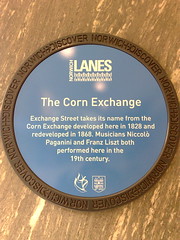
The Corn Exchange Exchange Street takes its name from the Corn Exchange developed here in 1828 and redeveloped in 1868. Musicians Niccolo Paganini and Franz Liszt both performed here in the 19th century.
Jarrold's, Exchange Street, Norwich, United Kingdom
Subjects


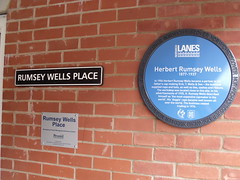
Herbert Rumsey Wells 1877-1937 In 1904 Herbert Rumsey Wells became a partner in his father's cap-making firm, T. Wells & Son - the business supplied caps and hats, as well as ties, sashes and ribbons. The workshop was located close to this site. In his advertisements of 1935, H. Rumsey Wells described himself as "the most expensive capmaker in all the world". His "doggie" caps became well known all over the world. The business ceased trading in 1974
Rumsey Wells Place, Charing Cross, Norwich, United Kingdom
Subjects
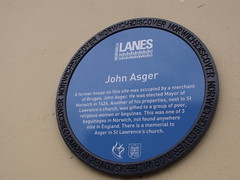
John Asger A former house on this site was occupied by a merchant of Bruges, John Asger. He was elected Mayor of Norwich in 1426. Another of his properties, next to St Lawrence's church, was gifted to a group of poor, religious women or beguines. This was one of 3 beguinages in Norwich, not found anywhere else in England. There is a memorial to Asger in St Lawrence's church.
Charing Cross, Norwich, United Kingdom
Subjects
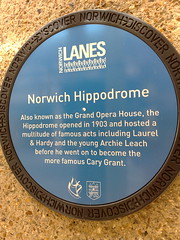
Norwich Hippodrome Also known as the Grand Opera House, the Hippodrome opened in 1903 and hosted a multitude of famous acts including Laurel & Hardy and the young Archie Leach before he went on to become the more famous Cary Grant
St Giles Street, Norwich, United Kingdom
Subjects

First Provincial Newspaper The Norwich Post, England's first provincial newspaper, was first printed on this site in 1701 by Francis Burges. The City also claims the record for the longest continuously printed local newspaper, the Norwich Mercury, founded in 1714.
Castle Street, Norwich, United Kingdom
Subjects

Fishergate This area may have been the first settlement that can be thought of as 'Norwich', in its original forms NORTHWIC and NORVIC. Archaeological finds in Fishergate go back to the 8th century AD, and a coin of King Athelstan (reigned 924-939), which refers to NORVIC, is likely to have been minted in a defended area on the north bank of the River Wensum. In the 19th century a property here was known as 'Mint Yard' and may have commemorated the ancient mint.
21-15 Fishergate, Norwich, United Kingdom
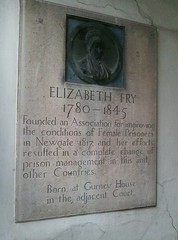
Elizabeth Fry 1780 - 1845 Founded an Association for improving the conditions of Female Prisoners in Newgate 1817 and her efforts resulted in a complete change of prison management in this and other Countries. Born at Gurney House in the adjacent Court
Gurney House, Norwich, United Kingdom
Subjects
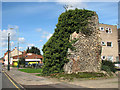
St. Bartholomew's Church The remains of the 14th century church, the building was desecrated in 1549.
Ber Street, Norwich, United Kingdom

City of Norwich Gaol 1827-1881 On this site stood a gaol which could detain 120 prisoners and for their misdemeanours they were sentenced to work a Tread Mill keeping a constant retrograde motion to grind corn.
On gate pier of St John's RC Cathedral, Earlham Road, Norwich, United Kingdom
Subjects

Coslany 'Coslany' may mean 'island with reeds'. In the 13th century this bridge consisted of two bridges which ran on to an island in the middle of the river. It may well have been a crossing point in Viking times.
St Giles Street, Norwich, United Kingdom

Browne's Meadow Sir Thomas Browne 1605-1682 Physician and author of Religio Medici had a lease of a meadow on the site behind this plaque
Ferry Lane, Norwich, United Kingdom
Subjects

Carrow Hill Near this place on 9-7-1940 five employees of J & J Colman Ltd were killed by German bombs. Maud Balaam (40) Maud Burrell (37) Bertha Playford (19) Gladys Samson (18) and Bessie Upton (36) were the first civilians victims of Norwich to die from enemy action during WWII.
Carrow Hill, Norwich, United Kingdom
Subjects
BBC Music Day 2017 #BBC East 4
Opened in 1977 the Norwich Arts Centre was named 'Britain’s Best Small Venue' by the NME. [full inscription unknown]
Norwich Arts Centre, Norwich, United Kingdom
Subjects
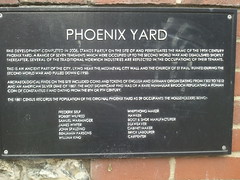
Phoenix Yard This development, completed in 2006, stands partly on the site of and perpetuates the name of the 19th century Phoenix Yard, a range of seven tenements which were occupied up to the Second World War and demolished shortly thereafter. Several of the traditional Norwich industries are reflected in the occupations of their tenants. This is an ancient part of the city, lying near the mediaeval city wall and the church of St Paul, ruined during the Second World War and pulled down c.1950. Archaeological finds on this site included coins and tokens of English and German origin dating from 1302 to 1612 and an American silver dime of 1887. The most significant find was of a rare nummular brooch replicating a Roman coin of Constantius II and dating from the 8th or 9th century. The 1881 census records the population of the original Phoenix Yard as 39 occupants, the householders being: - Frederik Self whipthong maker Robert Wilfred hawker Samuel Warminger boot & shoe manufacturer James Winter silkweaver John Spalding cabinet maker Benjamin Parsons brick labourer William King carpenter
Leopard Court, Norwich, United Kingdom
Subjects
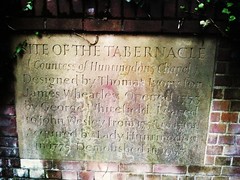
Site of The Tabernacle (Countess of Huntingdon's Chapel). Designed by Thomas Ivory for James Wheatley. Opened 1753 by George Whitefield. Leased to John Wesley from 1758 to 1764. Acquired by Lady Huntingdon in 1775. Demolished in 1953.
17 Bishopgate, Norwich, United Kingdom
Subjects
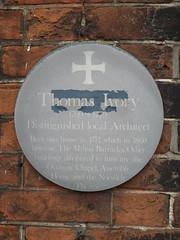
Thomas Ivory 1709-1779 Distinguished Local Architect. Built this house in 1771 which in 1860 became The Militia Barracks. Other buildings attributed to him are the Octagon Chapel, Assembly House and the Norwich Theatre.
Ivory House, All Saints Green, Norwich, United Kingdom
Subjects
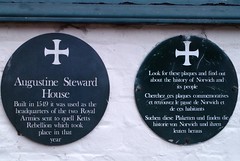
Augustine Steward House Built in 1549 it was used as the headquarters of the two Royal Armies sent to quell Ketts Rebellion which took place in that year
Augustine Steward House, Tombland, Norwich, United Kingdom
Subjects
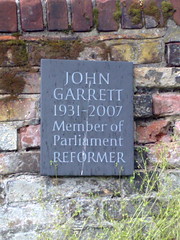
John Garrett 1931-2007 Member of Parliament Reformer
Princes Street, Norwich, United Kingdom
Subjects
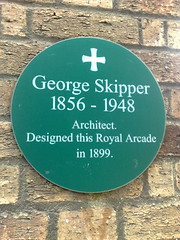
George Skipper 1856-1948 Architect. Designed this Royal Arcade in 1899.
Arcade Street, Norwich, United Kingdom
Subjects

Mabel Clarkson 1875 - 1950 first woman councillor first of many still too few
Guildhall, Norwich, United Kingdom
Subjects
In 1075 Emma De Gauder held this castle against the king
Norwich Castle, Norwich, United Kingdom
Subjects
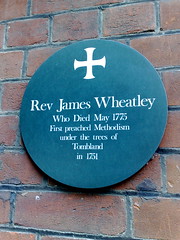
Rev James Wheatley Who Died May 1775 First preached Methodism under the trees of Tombland in 1751
Shiki, Princes Street, Norwich, United Kingdom
Subjects

This boundary cross was erected in the 15th century to mark the spot at which the King's Way crossed the Norwich city boundary.
Boundary Road, Norwich, United Kingdom

Known as Swynemarket in the 13th century. Later known as Alderhallen Green - from the Lld English earlna halena meaning All Hallows or All Saints, after the church.
All Saints Green, Norwich, United Kingdom
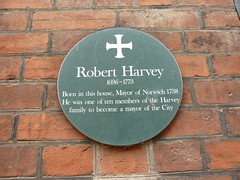
Robert Harvey 1696-1773 Born in this house, Mayor of Norwich 1738. He was one of ten members of the Harvey family to become a mayor of the City.
20 Colegate, Norwich, United Kingdom
Subjects

Confound and Destroy No. 100 Group Royal Air Force This tree was planted by 'Kiwi' Evans RNZAF and Eileen Boorman to commemorate the men and women who served with 100 Group RAF and to honour those who gave their lives. "We shall remember them"
?, Norwich, United Kingdom


This cherry tree was planted on 8th May 1995 the 50th anniversary of VE Day by veterans of the 458th Bombardment Group Horsham St Faiths (1944/45) It commemorates the anniversary of the ending of hostilities, the memory of their fallen comrades and their continued friendship with the people of Norwich.
?, Norwich, United Kingdom
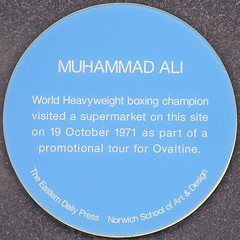
Muhammad Ali World Heavyweight boxing champion visited a supermarket on this site on 19 October 1971 as part of a promotional tour for Ovaltine.
St Stephens Street, Norwich, United Kingdom
Subjects


Mary Chapman 1647-1724 Wife of the Reverend Samuel Chapman, founded this hospital known as Bethel in 1713, which was built wholly at her own expense.
Formerly the Bethel Hospital on Bethel Street, Norwich, United Kingdom

Paper Mill Yard formed a small part of the Carrow Works factory development, established by Colmans in the 19th century. The name comes from the paper mill, which was found at this part of the site between 1884 and 1900. The buildings on the site not only produced the mustard for which the Colmans brand is so famous - flour, cereals, starch, sauces, baby food and laundry blue were all manufactured here.
Paper Mill Yard, Norwich, United Kingdom

The Boom Towers were built in 1344 to defend the approach to Norwich by water. The use of a chain across the water, between the two towers, controlled river traffic and prevented the unauthorised entry of vehicles. The eastern tower is known as the Devil's Tower.
near Carrow Road, Norwich, United Kingdom
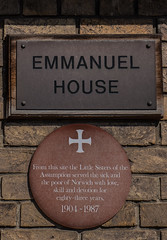
From this site the Little Sisters of the Assumption served the sick and the poor of Norwich with love, skill and devotion for eighty-three years. 1904-1987
Grapes Hill, Norwich, United Kingdom
Subjects
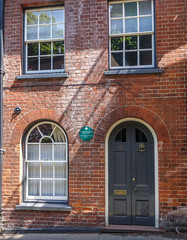
Joseph Stannard 1797-1830 Lived in this house. He was the first of the Stannard family of painters which also included Alfred 1806-1889, Alfred George 1828-1885 and Eloise Harriet 1829-1915.
5 St Giles Terrace, Norwich, United Kingdom
Subjects

Site of the Chapel of St Mary in the Fields, founded as a hospice by John le Brun in 1248 instituted as a College in 1278 and suppressed in 1545.
front brick pier of the Assembly House railings, Norwich, United Kingdom

St Laurence The west doorway of the church shows the martyrdom of St Edmund by the Danes. Killed by arrows, his head was cut off but was protected by a wolf. The wolf is shown at bottom right.
St Laurence Church, Norwich, United Kingdom
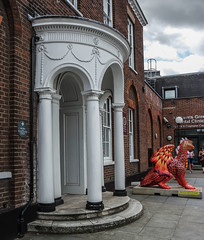
John Morse 1745-1837 Sheriff of Norwich 1779, Mayor 1781 & 1803. He was a brewer of porter in the parish of St Martins at Oak. Lived in this house.
former BBC premises, All Saints Green, Norwich, United Kingdom
Subjects
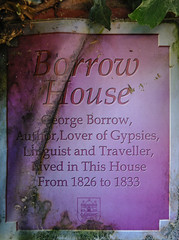
Borrow House George Borrow, Author, Lover of Gypsies, Linguist and Traveller, Lived in This House From 1826 to 1833
George Borrow House, Norwich, United Kingdom
Subjects
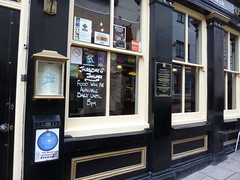
The Murderers Public House The Murderers/Gardeners Arms Public House is unusual in that it has two names. The Murderers name commemorates events that took place here in June 1895, when Frank Miles murdered his estranged wife Mildred, who lived here with her mother. He was given the death penalty, but this was later commuted to life imprisonment after public outcry, on the grounds that he had been provoked. Frank died in Parkhurst prison in 1905.
The Murderers pub, Timberhill, Norwich, United Kingdom
Subjects


Pettus House 41/43 Elm Hill. This building was a small part of the original house occupied by the Pettus family from 1550 until 1683. They included Thomas Pettus, Sheriff in 1556, Mayor in 1590, also Sir John Pettus, Mayor in 1608.
Pettus House, 41/43 Elm Hill, Norwich, United Kingdom
Subjects
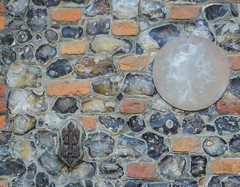
Earlham Hall The home of the Gurney family from 1786-1912. It was visited by their many friends including Amelia Opie, Harriet Martineau and William Wilberforce. The hall dates from c 1642.
Earlham Hall, Norwich, United Kingdom
Subjects


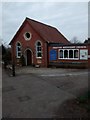
This stone was laid by Mr John Vassar of Norwich May 17th 1892
Drayton High Road, Norwich, United Kingdom
The Nest Norwich City Football Club played their home matches on this site 1908-1935
Rosary Road, Norwich, United Kingdom
Subjects
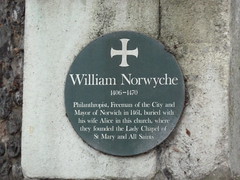
William Norwyche 1406-1470 Philanthropist, Freeman of the City and Mayor of Norwich in 1461, buried with his wife Alice in this church, where they founded the Lady Chapel of St Mary and All Saints.
Side of St Georges Church in Muspole Street, Norwich, United Kingdom
Subjects
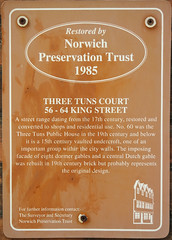
Three Tuns Court 56-64 King Street A street range dating from the 17th century, restored and converted to shops and residential use. No 60 was the Three Tuns Public House in the 19th century and below it is a 15th century vaulted undercroft, one of an important group within the city walls. The imposing facade of eight dormer gables and a central Dutch gable was rebuilt in 19th century brick but probably represents the original design.
Three Tuns Court, 56-64 King Street , Norwich, United Kingdom
Subjects
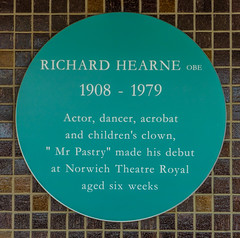
Richard Hearne OBE 1908-1979 Actor, dancer, acrobat and children's clown, 'Mr Pastry' made his debut at Norwich Theatre Royal aged six weeks.
Theatre Royal, Theatre Street, Norwich, United Kingdom
Subjects

Lion and Castle Yard Timberhill This small building is formed from two of the very few surviving cottages built in the 17th century and once common in the city. One has been restored with its original roof of reed thatch. They may have been lived in by weavers. From the 14th to the 19th centuries Norwich was famous for it's textiles - "Norwich stuff" - of woollen cloth, worsted and silk made on looms in the weavers' own houses.
Lion and Castle Yard, Timberhill, Norwich, United Kingdom
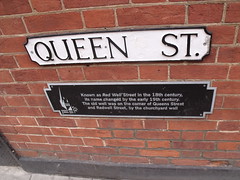
Queen St. Known as Red Well Street in the 18th century, it's name changed by the early 19th century. The old well was on the corner of Queens Street and Redwell Street, by the churchyard wall
Queen Street, Norwich, United Kingdom
Subjects
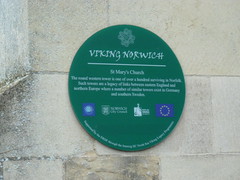
St Mary's Church The round western tower is one of a hundred surviving in Norfolk. Such towers are a legacy of links between eastern England and northern Europe where a number of similar towers exist in Germany and southern Sweden.
St Marys Plain, Norwich, United Kingdom
Subjects

Dolphin Inn Formerly the palace of Bishop Joseph Hall 1574-1656 Bishop of Norwich from 1641 until 1647 when he was forced to retire after his cathedral had been pillaged and desecrated.
Dolphin Inn, 258 Heigham Street, Norwich, United Kingdom

Sarah Glover 1786-1867 The Norwich sol-fa is a music reading system devised by Sarah Glover in the 19th century. This technique utilized the ancient set of syllables do, re, mi, fa, sol, la, ti, which allowed people to sight-read music more easily. Her methods became well known across the county and were later used by the Rev. John Curwen as the basis of his Tonic Sol-fa system. There is a memorial to her in the church.
St Benedicts Street, Norwich, United Kingdom
Subjects

This building was designed by P. G. Hardwick as the Crown Bank and completed in 1866, was from 1875 to 1969 Norwich Head Post Office, and was latered and restored in 1980 by Anglia Television as part of their new television complex
King Street, Norwich, United Kingdom
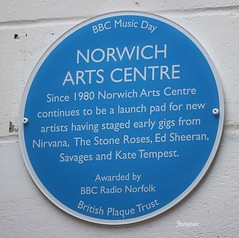
Norwich Arts Centre Since 1980 Norwich Arts Centre continues to be a launch pad for new artists having staged early gigs from Nirvana, The Stone Roses, Ed Sheeran, Savages and Kate Tempest Awarded by BBC Radio Norfolk
St. Benedict’s Street, Norwich, United Kingdom
Subjects


Richard Spynke Directed the fortification of the City gates and towers between 1337 and 1344. This work was carried out at his own expense.
On old city wall, Queens Road, Norwich, United Kingdom
Subjects
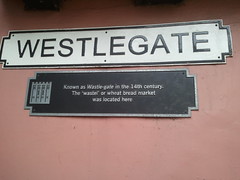
Westlegate - Known as Wastle-gate in the 14th century. The 'wastel' or wheat bread market was located here.
20 Westlegate, Norwich, United Kingdom
Subjects
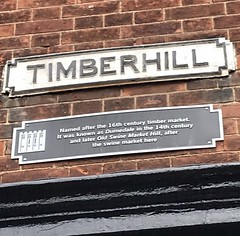
Timberhill Named after the 16th century timber market. It was known as Durnedale in the 14th century and later Old Swine Market Hill, after the swine market here
Timberhill, Norwich, United Kingdom
Subjects
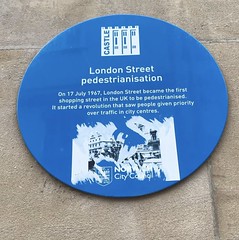
London Street pedestrianisation On 17 July 1967, London Street became the first shopping street in the UK to be pedestrianised. It started a revolution that saw people given priority over traffic in city centres.
34-36 London St, NR2 1LD, Norwich, United Kingdom
Subjects
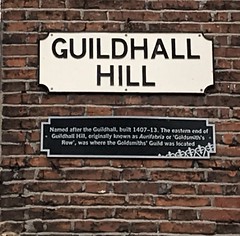
Guildhall Hill Named after the Guildhall, built 1407-13. The eastern end of Guildhall Hill, originally known as Aurifabria or 'Goldsmith's Row', was where the Goldsmiths' Guild was located
Guildhall Hill, Norwich, United Kingdom
Subjects
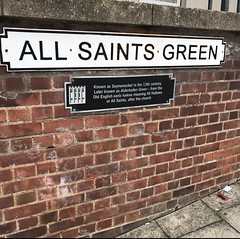
All Saints Green Known as Swynemarket in the 13th century. Later known as Alderhallen Green - from the Old English earla halena meaning All Hallows or All Saints, after the church
All Saints Green, Norwich, United Kingdom
Subjects
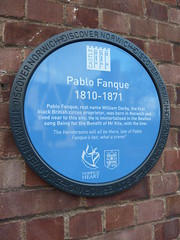
Pablo Fanque 1810-1871 Pablo Fanque, real name William Darby, the first black British circus proprietor, was born in Norwich and lived near to this site. He is immortalised in the Beatles song Being for the Benefit of Mr Kite, with the line: 'The Hendersons will all be there, late of Pablo Fanque's fair, what a scene!'
John Lewis department store, All Saints Green, Norwich, United Kingdom
Subjects


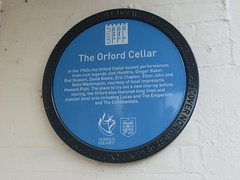
The Orford Cellar In the 1960s the Orford Cellar hosted performances from rock legends Jimi Hendrix, Ginger Baker, Rod Stewart, David Bowie, Eric Clapton, Elton John and Geno Washington, courtesy of local impresario Howard Platt.The place to try out a new line-up before touring, the Orford also featured long lived and popular local acts including Lucas and The Emperors and The Continentals
Red Lion Street, Norwich, United Kingdom
Subjects


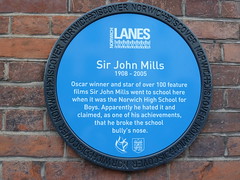
Sir John Mills (1908-2005) Oscar winner and star of over 100 feature films Sir John Mills went to school here when it was the Norwich High School for Boys. Apparently he hated it and claimed, as one of his achievements, that he broke the school bully's nose
Upper St Giles Street, Norwich, United Kingdom
Subjects


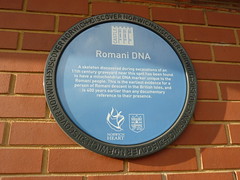
Romani DNA A skeleton discovered during excavations of an 11th century graveyard near this spot has been found to have a mitochondrial DNA marker unique to the Romani people. This is the earliest evidence for a person of Romani descent in the British Isles, and is 400 years earlier than any documentary reference to their presence.
Golden Ball Street, Norwich, United Kingdom
Subjects
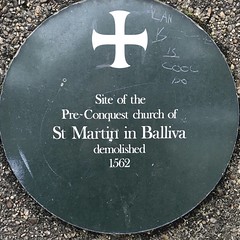
Site of the Pre-Conquest church of St Martin in Balliva demolished 1562.
Front of Eastern Daily Press Building, Cattlemarket Street, Norwich, United Kingdom
Subjects
Circa 1650 23 White Lion Street The oldest surviving shop in Norwich Originally built as a saddlery in this French speaking quarter
23 White Lion Street, Norwich, United Kingdom
Subjects
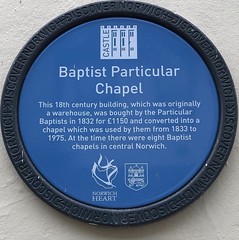
Baptist Particular Chapel This 18th century building, which was originally a warehouse, was bought by the Particular Baptists in 1832 for £1150 and converted into a chapel which was used by them from 1833 to 1975. At the time there were eight Baptist chapels in central Norwich.
Timberhill, Norwich, United Kingdom
Subjects
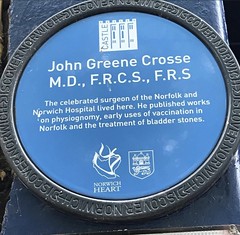
John Greene Crosse M.D., F.R.C.S., F.R.S The celebrated surgeon of the Norfolk and Norwich Hospital lived here. He published works on physiognomy, early uses of vaccination in Norfolk and the treatment of bladder stones.
Norwich, Norwich, United Kingdom
Subjects
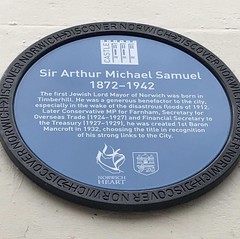
Sir Arthur Michael Samuel 1872-1942 The first Jewish Lord Mayor of Norwich was born in Timberhill. He was a generous benefactor to the city, especially in the wake of the disastrous floods in 1912. Later Conservative MP for Farnham, Secretary for Overseas Trade (1924-1927) and Financial Secretary to the Treasury (1927-1929), he was created 1st Baron Mancroft in 1932, choosing the title in recognition of his strong links to the City.
Red Lion Street, Norwich, United Kingdom
Subjects
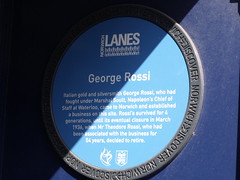
George Rossi Italian gold and silversmith George Rossi, who had fought under Marshal Soult, Napoleon's Chief of Staff at Waterloo, came to Norwich and established a business on this site. Rossi's survived for 4 generations, until its eventual closure in March 1936, when Mr Theodore Rossi, who had been associated with the business for 54 years, decided to retire.
9 Guildhall Hill, Norwich, United Kingdom
Subjects

Norfolk and Norwich Subscription Library From 1837-1976, this building housed a private Subscription Library, founded in 1784 and originally located in St Andrew's Hall. The Hall was also the site for Norwich City Library. Founded in 1608, it was the first library to be established by a corporation in a corporately owned building outside London. Norwich was also the first city in Britain to adopt the Public Libraries Act of 1850.
Guildhall Hill, Norwich, United Kingdom
Subjects
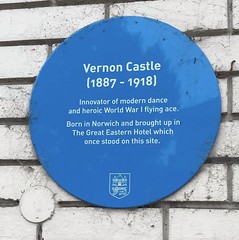
Vernon Castle (1887-1918). Innovator of modern dance and heroic World War I flying ace. Born in Norwich and brought up in The Great Eastern Hotel which once stood on this site.
Premier Inn Nelson Hotel, Prince of Wales Road, Norwich, United Kingdom
Subjects

Thomas Bilney, 1495-1531 First Protestant Martyr. Imprisoned in vault below prior to execution by burning at Lollards Pit on 19 August 1531
Guildhall, Gaol Hill, Norwich, United Kingdom
Subjects
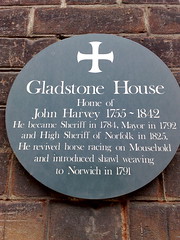
Gladstone House Home of John Harvey 1755-1842 He became Sheriff in 1784, Mayor in 1792 and High Sheriff of Norfolk in 1825. He revived horse racing on Mousehold and introduced shawl weaving to Norwich in 1791
Gladstone House, St Giles Street, Norwich, United Kingdom
Subjects

London Street Renamed London Lane in the 18th century, after the fashion of importing London-related street names. Originally called Hosyergate, meaning street of the stocking makers - old Danish 'gata' meant 'street'. In the 17th century it became Cockey Lane after the stream which ran through
London Street, Norwich, United Kingdom
Subjects
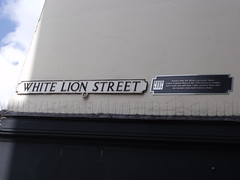
White Lion Street Named after the White Lion public house. Called Sadelere Rowe in the 13th century as saddles were made and sold here. Later, Lorimers Rowe after the lorimers who made harness straps
White Lion Street, Norwich, United Kingdom
Subjects

Farmers Avenue Named after the Jolly Farmers Inn, which was in business from 1760 to 1962
Farmers Avenue, Norwich, United Kingdom
Subjects
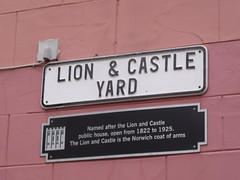
Lion & Castle Yard Named after the Lion and Castle public house, open from 1822 to 1925. The Lion and Castle is the Norwich coat of arms
Lion & Castle Yard, Norwich, United Kingdom
Subjects

Dove Street. Named after the Dove Tavern. Originally Smalegate, meaning narrow street - old Danish 'gata' meaning 'street'. Also Holdtor, from medieval English for prison tower, which may have pre-dated the Tollhouse in the Marketplace.
Dove Street, Norwich, United Kingdom
Subjects
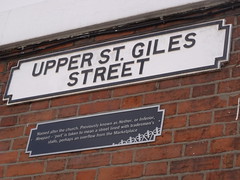
Upper St. Giles Street Named after the church. Previously known as Nether, or Inferior, Newport - 'port' is taken to mean a street lined with tradesmen's stalls, perhaps an overflow from the Marketplace
Upper St. Giles Street, Norwich, United Kingdom
Subjects
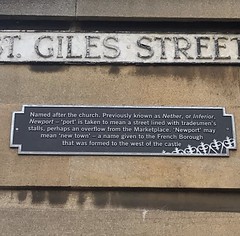
St Giles Street Named after the church. Previously known as Nether, or Inferior, Newport - 'port' is taken to mean a street lined with tradesmen's stalls, perhaps an overflow from the Marketplace. 'Newport' may mean 'new town' - a name given to the French Borough that was formed to the west of the castle
St Giles Street, Norwich, United Kingdom
Subjects
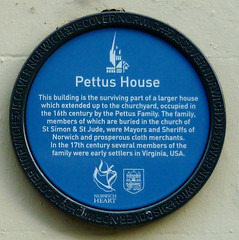
Pettus House This building is the surviving part of a larger house which extended up to the churchyard, occupied in the 16th century by the Pettus Family. The family, members of which are buried in the church of St Simon & St Jude, were Mayors and Sheriffs of Norwich and prosperous cloth merchants. In the 17th century, several members of the family were early settlers in Virginia, USA.
41-43 Elm Hill, Norwich, United Kingdom
Subjects
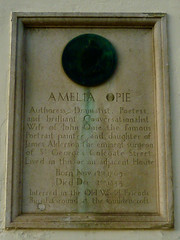
Amelia Opie Authoress, Dramatist, Poetess and brilliant Consversationalist. Wife of John Opie the famous Portrait painter and daughter of James Alderson the eminent surgeon of St George's Colegate Street Lived in this or an adjacent house Born Nov 19th 1769 Died Dec 2nd 1853 Interred in the Old World Friends Burial Ground of the Gilldencroft
Castle Meadow / Opie Street, Norwich, United Kingdom
Subjects
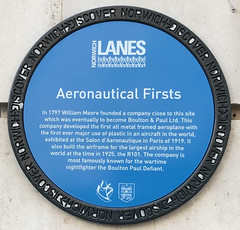
Aeronautical Firsts In 1797 William Moore founded a company close to this site which was eventually to become Boulton & Paul Ltd. This company developed the first all metal framed aeroplane with the first ever major use of plastic in an aircraft in the world, exhibited at the Salon d'Aeronautique in Paris of 1919. It also built the airframe for the largest airship in the world at the time in 1925, the R101. The company is most famously known for the wartime nightfighter the Boulton Paul Defiant.
London Street, Norwich, United Kingdom
Subjects

"Matthew Shardlake" Stayed here in 1549. As featured in Tombland by C. J. Sansom Published 2018
Tombland, Norwich, United Kingdom
Subjects
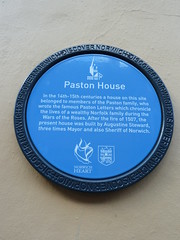
Paston House In the 14th-15th centuries a house on this site belonged to members of the Paston family, who wrote the famous Paston Letters which chronicle the lives of a wealthy Norfolk family during the Wars of the Roses. After the fire of 1507, the present house was built by Augustine Steward, three times Mayor and also Sheriff of Norwich.
The Strangers' Club, 22-24 Elm Hill, Norwich, United Kingdom
Subjects
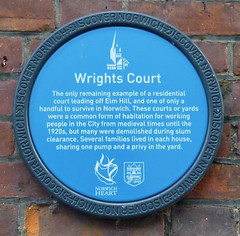
Wrights Court The only remaining example of a residential court leading off Elm Hill, and one of only a handful to survive in Norwich. These courts or yards were a common form of habitation for working people in the City from Medieval times until the 1920s, but many were demolished during slum clearance. Several families lived in each house, sharing one pump and a privy in the yard.
Wright's Court, off Elm Hill, Norwich, United Kingdom
Subjects
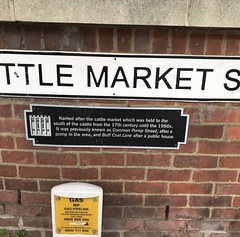
Cattle Market Street Named after the cattle market which was held to the south of the castle from the 17th century until the 1960s. It was previously known as Common Pump Street, after a pump in the area, and Buff Coat Lane after a public house
Cattle Market Street, Norwich, United Kingdom
Subjects
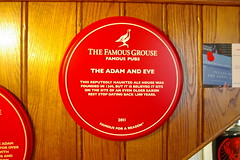
The Adam and Eve. This reputedly haunted ale house was founded in 1249, but it is believed it sits on the site of an even older Saxon rest stop dating back 1,500 years.
17 Bishopgate, Norwich, United Kingdom
Subjects
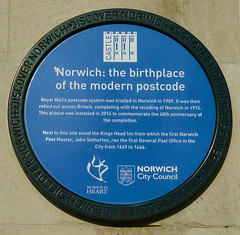
Norwich: the birthplace of the modern postcode Norwich: the birthplace of the modern postcode Royal Mail's postcode system was trialled in Norwich in 1959. It was then rolled out across Britain, completing with the recoding of Norwich in 1974. This plaque was installed in 2014 to commemorate the 40th anniversary of the completion. Next to this site stood the Kings Head Inn from which the first Norwich Post Master, John Sotherton, ran the first General Post Office in the City from 1649 to 1666.
Gentleman's Walk, Norwich, United Kingdom
Subjects

The Bell Hotel With its origins in the late 15th century, the Bell (originally the Blue Bell) retains much of the character of an 18th century coaching inn. Its most notable associations are with 18th century and 19th century clubs including the French inspired Revolution Club (1793); the anti Methodist Hell Fire Club, which victimised Charles and John Wesley in 1754; the Eldon Club, which included the Duke of Wellington among its members; and a Lilliput Parliament for young people in 1837.
Bell Hotel, Red Lion Street, Norwich, United Kingdom